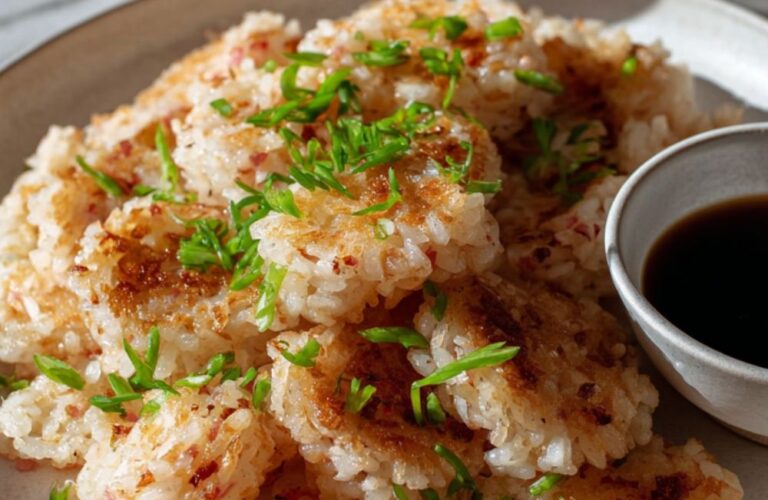
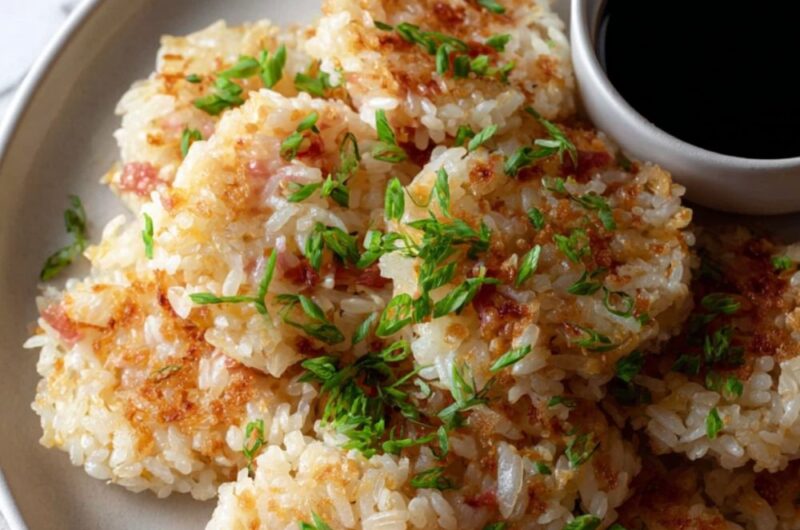
This Asian Rice Cakes recipe is a crispy and chewy recipe, which is made with scallions and pickled ginger. It’s the perfect savory snack, ready in about 50 minutes.
Jump to RecipeAsian Rice Cakes Ingredients
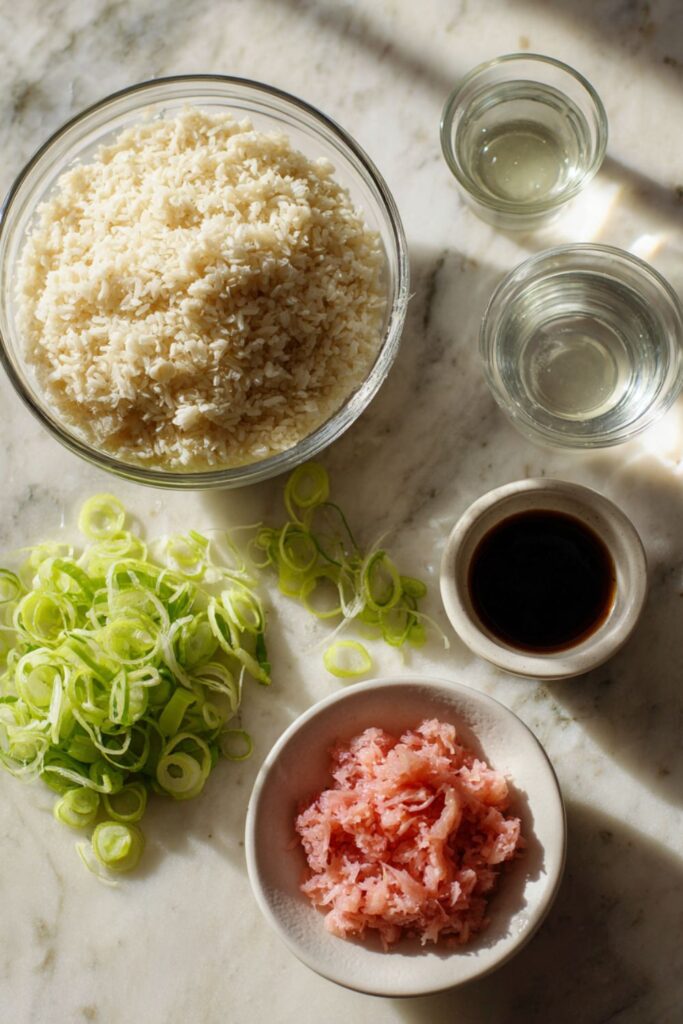
- 1/2 cup short-grain rice
- 1 cup water
- 2 tsp. rice wine vinegar
- 1 oz. (about 1/4 cup) thinly sliced scallions
- 1 Tbsp. chopped pickled ginger
- Cooking spray, as needed
How To Make Asian Rice Cakes
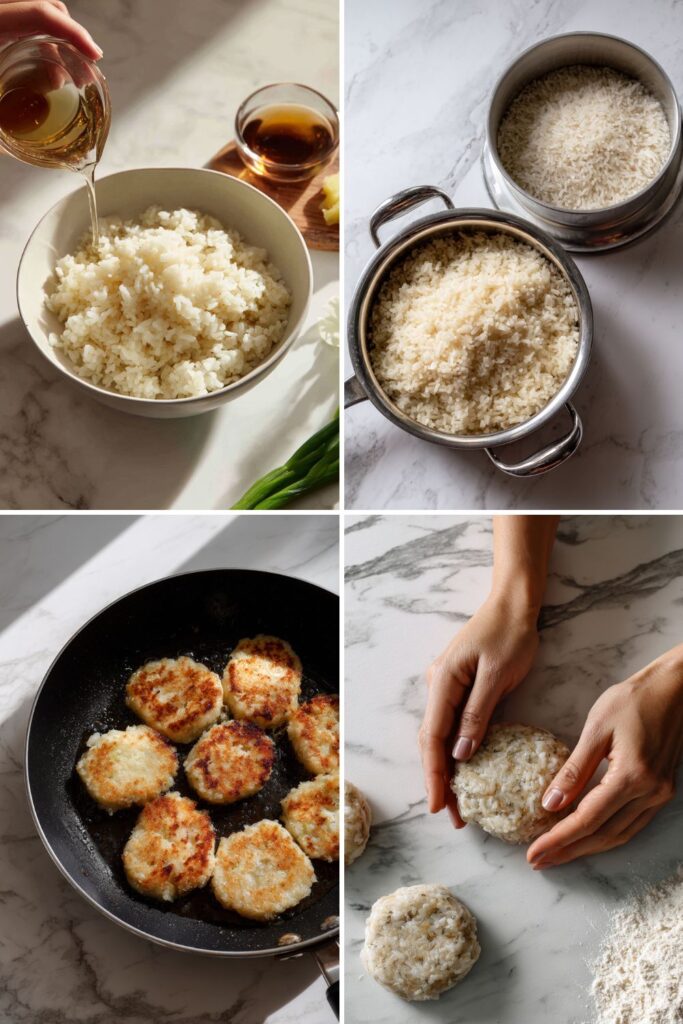
- Cook the Rice: In a small saucepan, combine the short-grain rice and 1 cup of water. Bring to a boil, then immediately reduce the heat to low, cover with a tight-fitting lid, and simmer for 15-20 minutes, or until all the water is absorbed.
- Rest the Rice: Remove the pan from the heat and let it stand, covered, for at least 10 minutes. This steaming step is crucial for the right sticky texture.
- Season the Rice: Transfer the hot, cooked rice to a medium bowl. Add the rice wine vinegar, sliced scallions, and chopped pickled ginger.
- Mix and Cool: Gently fold the ingredients into the rice using a rice paddle or spatula until evenly distributed. Let the mixture cool down for 5-10 minutes, or until it’s cool enough to handle.
- Form the Cakes: Dampen your hands with water (this prevents sticking). Scoop about 2 tablespoons of the rice mixture and press it firmly between your palms to form a small, flat patty or “cake.” Repeat with the remaining rice, making about 8 small cakes.
- Fry the Cakes: Coat a large non-stick skillet or griddle with cooking spray and place it over medium-high heat. Once hot, carefully add the rice cakes in a single layer.
- Crisp and Serve: Cook the rice cakes for 3-5 minutes per side, without moving them, until they are golden brown and have a crispy crust. Serve immediately, plain or with a side of soy sauce.
Recipe Tips
- What’s the best rice to use? You must use a short-grain or medium-grain rice, like sushi rice or Calrose rice. The high starch content is what makes the cakes sticky and hold their shape. Long-grain rice (like Basmati or Jasmine) will not work and the cakes will fall apart.
- How do I stop the rice from sticking to my hands? Keep a small bowl of cold water next to your workstation. Dip your hands in the water before forming each cake. The water creates a barrier and makes shaping the sticky rice effortless.
- Can I use leftover rice for this? Yes! This is a perfect way to use leftover short-grain rice. Just add the seasonings and a tiny splash of water, then microwave the rice for 30-60 seconds to warm it up. This makes it sticky and pliable again before you form the cakes.
- How can I add more flavor? Feel free to mix in other ingredients with the scallions and ginger. Toasted sesame seeds, a dash of soy sauce, or finely chopped kimchi are all excellent additions.
What To Serve With Asian Rice Cakes
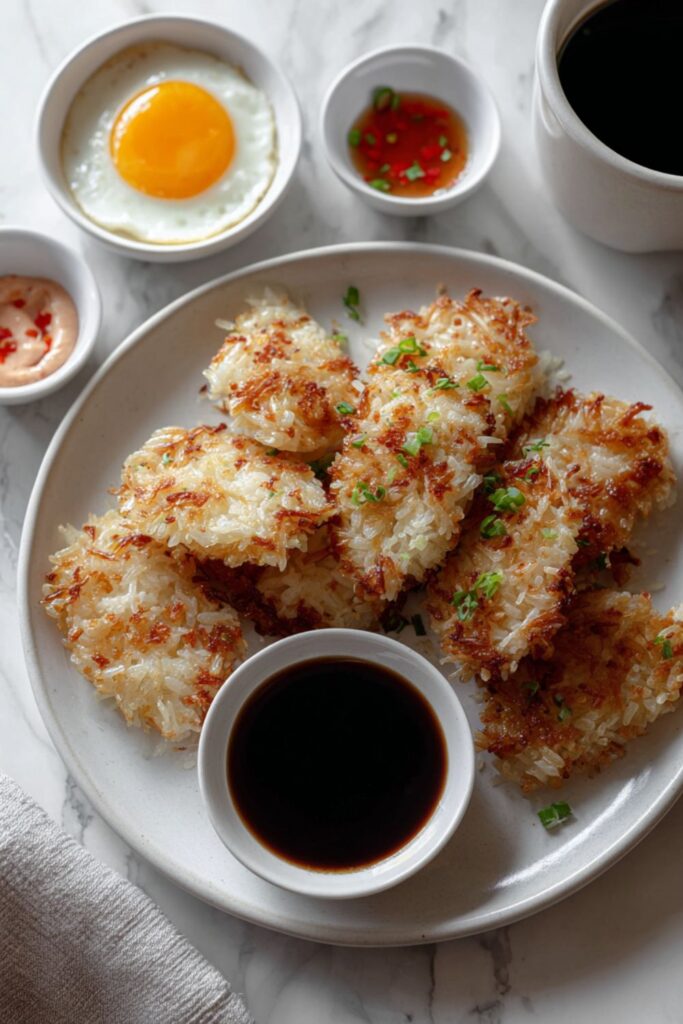
These savory cakes are fantastic on their own as a snack or appetizer, but they are even better with a simple dipping sauce.
- Soy sauce mixed with a little rice vinegar
- Sweet chili sauce
- Spicy mayo (Sriracha mixed with mayonnaise)
- A fried or poached egg on top for a small meal
How To Store Asian Rice Cakes
- Refrigerate: Store cooled rice cakes in an airtight container in the fridge for up to 3 days. Note: they will become very hard and dry once chilled.
- Reheat: The best way to bring them back to life is to re-fry them. Add a little cooking spray or oil to a non-stick pan and pan-fry them over medium heat for 2-3 minutes per side until they are hot and re-crisped.
Asian Rice Cakes Nutrition Facts
(Per cake, assuming 8 cakes)
- Calories: ~40 kcal
- Total Fat: 0.5g
- Saturated Fat: 0g
- Cholesterol: 0mg
- Sodium: 25mg
- Total Carbohydrate: 8g
- Dietary Fiber: 0.5g
- Sugars: 0g
- Protein: 1g
Nutrition information is estimated and may vary based on ingredients and cooking methods used.
FAQs
You either used the wrong kind of rice (like long-grain), or you didn’t pack the cakes tightly enough before frying. You really need to press them firmly when shaping.
No. These are pan-fried cakes made from cooked rice grains. Korean Tteokbokki are cylinder-shaped rice cakes made from steamed rice flour and are typically boiled or stewed in a spicy sauce.
You can try, but they won’t be as crispy. Spray them well with cooking spray and bake at 400°F (200°C) on a parchment-lined sheet, flipping once, for about 15-20 minutes.
Asian Rice Cakes Recipe
Course: AppetizersCuisine: AsianDifficulty: Easy8
servings15
minutes30
minutes40
kcalCrispy on the outside, chewy on the inside, these savory pan-fried rice cakes are packed with fresh scallion and zesty pickled ginger.
Ingredients
1/2 cup short-grain rice
1 cup water
2 tsp. rice wine vinegar
1 oz. (about 1/4 cup) thinly sliced scallions
1 Tbsp. chopped pickled ginger
Cooking spray, as needed
Directions
- Combine rice and water in a small pot. Bring to a boil, then cover, reduce heat to low, and simmer for 15-20 minutes until water is absorbed.
- Remove from heat and let stand, covered, for 10 minutes.
- Transfer hot rice to a bowl. Gently mix in the rice wine vinegar, scallions, and pickled ginger.
- Let the mixture cool for 5-10 minutes until you can handle it.
- With damp hands, form the rice into 8 small, tightly packed, flat patties.
- Coat a non-stick skillet with cooking spray and heat over medium-high heat.
- Fry the cakes for 3-5 minutes per side, until a deep golden brown and crispy crust forms. Serve immediately.
Notes
- You must use short-grain (sushi) rice. Long-grain rice will not stick together.
- Keep a small bowl of water nearby to dampen your hands, which prevents the sticky rice from sticking to you.
- These are best served hot and fresh. They will harden considerably as they cool.