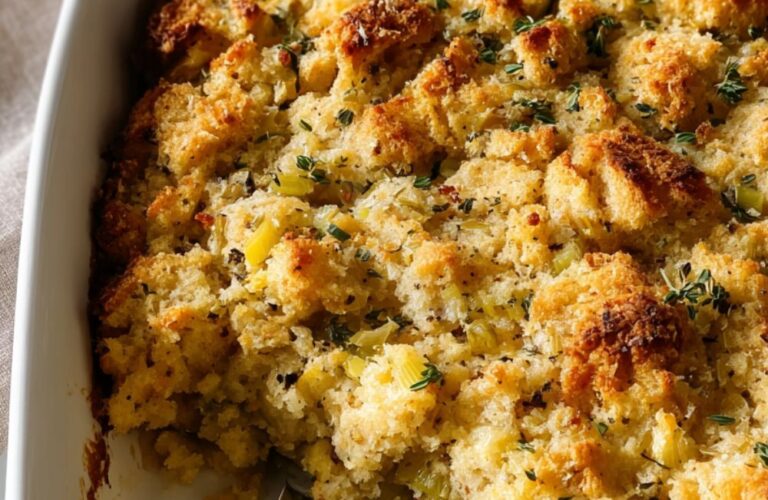
This Cornbread Dressing Recipe is a savory and moist recipe, which features homemade buttermilk cornbread and aromatic sage. It’s the ultimate Southern holiday staple, ready in about 1 hour and 30 minutes (including cornbread baking time).
Jump to RecipeCornbread Dressing Recipe Ingredients
For the buttermilk cornbread:
- 1 cup yellow cornmeal
- 1 cup all-purpose flour
- 3 tbsp sugar
- 1 tbsp baking powder
- 1½ tsp kosher salt
- 2 eggs, lightly beaten
- ½ cup (1 stick) butter, melted
- 1 cup whole buttermilk
For the dressing:
- 1 (14 oz) bag herb-seasoned stuffing mix (like Pepperidge Farm)
- 2 sticks (1 cup) butter, divided
- 2 cups chopped sweet onion
- 1½ cups chopped celery
- 5 cups chicken or turkey stock (hot)
- 5 eggs, lightly beaten
- 2 tsp dried sage
- Kosher salt and black pepper
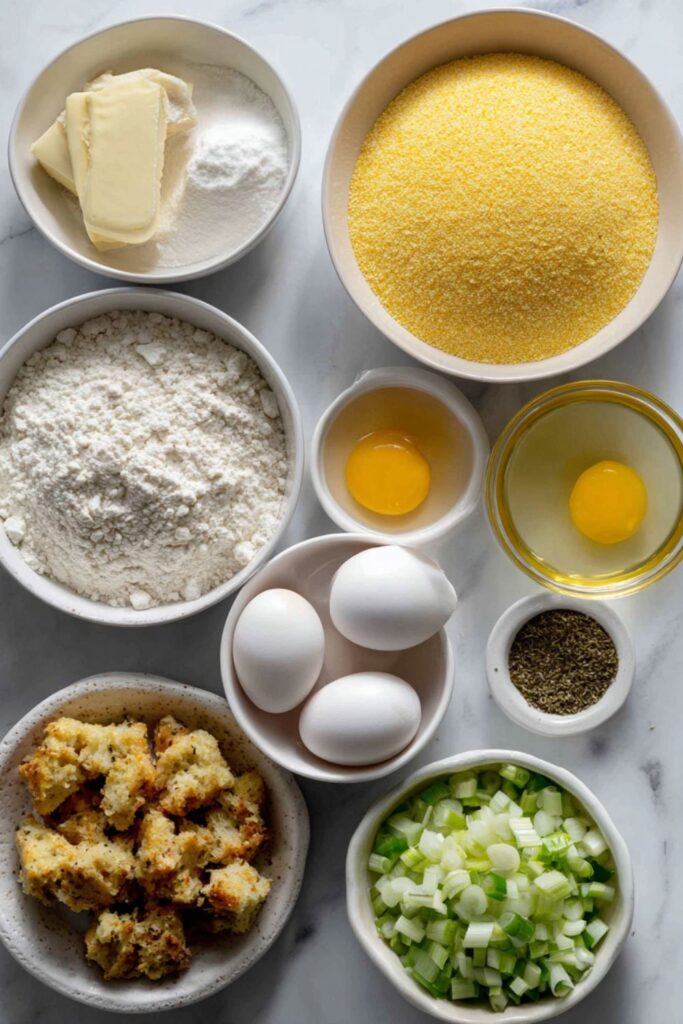
How To Make Cornbread Dressing Recipe
- Preheat the skillet: Grease a 10″ cast iron skillet generously. Place it in the oven and preheat to 220°C (428°F). Getting the skillet hot before adding the batter creates the signature crispy crust needed for texture.
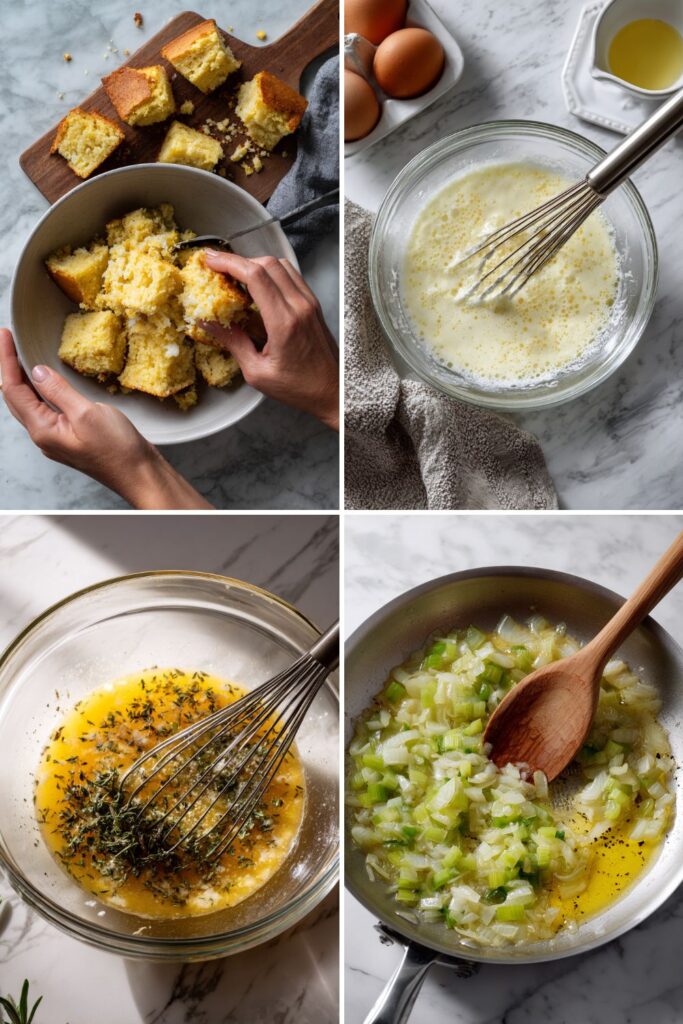
- Make the cornbread batter: In a medium bowl, mix the cornmeal, flour, sugar, baking powder, and salt. In a separate bowl, whisk the eggs, melted butter, and buttermilk. Pour the wet ingredients into the dry and combine just until mixed—don’t over-stir, or the bread will be tough.
- Bake the cornbread: Carefully remove the hot skillet from the oven. Pour the batter into the hot skillet (it should sizzle). Bake for 16–19 minutes until golden brown. Let it cool completely, then crumble it into coarse pieces (you should have about 5 cups).
- Prep the dressing dish: Turn the oven down to 175°C (350°F). Grease a 9×13″ baking dish.
- Sauté vegetables: Melt 1 stick of butter in a large skillet over medium heat. Sauté the chopped onion and celery for 10–12 minutes until soft and translucent, but not browned.
- Mix the dry base: In a very large bowl, combine the crumbled cornbread, the bag of herb-seasoned stuffing mix, the cooked veggie/butter mixture, and the second stick of melted butter. Toss to combine.
- Add the liquid: In a separate bowl or pitcher, whisk the hot stock, beaten eggs, and dried sage together. (Tip: Whisk the eggs into the stock slowly so they don’t scramble). Pour this liquid over the bread mixture. Mix well. Season with salt and pepper. Let it sit for 5–10 minutes to allow the bread to soak up the liquid. The mixture should look very wet and soupy.
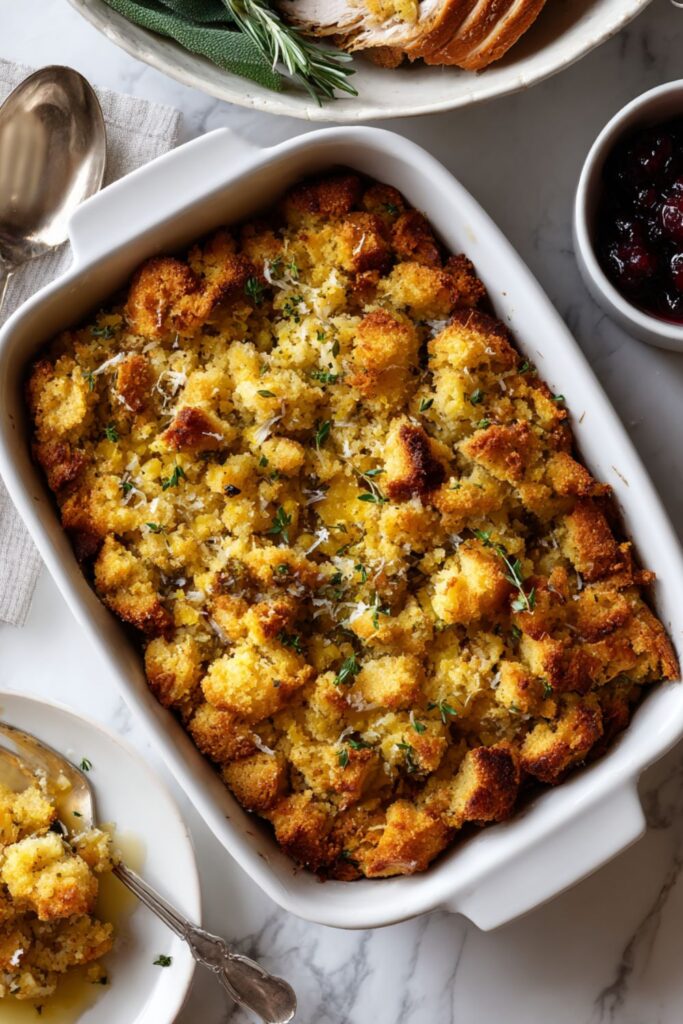
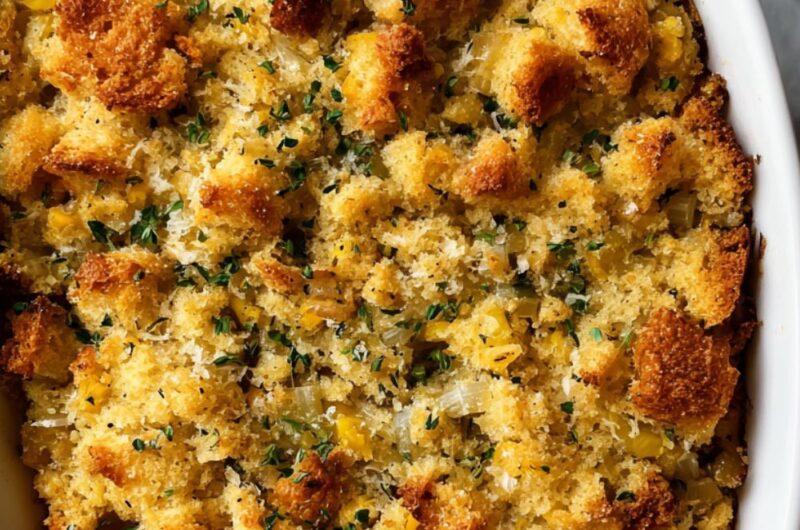
- Bake: Pour the dressing into the prepared baking dish. Bake uncovered for 45–50 minutes, until the top is golden brown and the center is set (no longer liquid).
Recipe Tips
- The “Soupy” Rule: The number one mistake with dressing is making it too dry before it goes in the oven. The mixture should look almost like soup before baking. If it looks dry in the bowl, add more stock. The cornbread acts like a sponge and will absorb it all.
- Stale is Better: If you have time, bake the cornbread a day or two in advance. Slightly stale cornbread holds its structure better when mixed with the liquid, preventing the dressing from becoming a singular mushy block.
- Stuffing Mix: Adding the bag of herb-seasoned stuffing mix (the dry cubes) adds a necessary textural contrast to the soft cornbread, giving the dressing structure.
- Sage Advice: Dried sage is potent. Start with 2 teaspoons, but taste your stock mixture before adding it to the bread. If you love sage, feel free to add more or use fresh chopped sage (about 1 tablespoon).
- Tempering Eggs: Since the recipe calls for hot stock, be careful not to scramble the raw eggs. Whisk the eggs in a separate bowl, add a little warm stock to the eggs to bring their temp up, and then whisk the eggs into the main pot of stock.
What To Serve With Cornbread Dressing Recipe
This is the quintessential side dish for festive feasts.
- Roast Turkey: The classic Thanksgiving partner.
- Giblet Gravy: Pour it generously over the dressing.
- Cranberry Sauce: The tartness cuts through the savory richness.
- Collard Greens: A Southern staple that pairs perfectly.
How To Store Cornbread Dressing Recipe
- Refrigerate: Store leftovers in an airtight container in the refrigerator for up to 3 to 4 days.
- Reheat: Reheat slices in the oven at 350°F covered with foil to keep it moist, or microwave individual portions.
- Freeze: You can freeze the baked dressing. Wrap tightly in plastic wrap and foil. Freeze for up to 1 month. Thaw in the fridge overnight before reheating.
Cornbread Dressing Recipe Nutrition Facts
- Calories: 420
- Total Fat: 24g
- Saturated Fat: 12g
- Cholesterol: 110mg
- Sodium: 950mg
- Total Carbohydrates: 42g
- Dietary Fiber: 3g
- Sugar: 6g
- Protein: 8g
Nutrition information is estimated per serving (based on 12 servings).
FAQs
Technically, “stuffing” is cooked inside the bird, while “dressing” is baked in a separate casserole dish. In the South, it is almost always called Cornbread Dressing regardless of how it is cooked.
Yes. You can assemble the entire dish (up to step 7), cover it tightly, and refrigerate it overnight. Bake it the next day, adding about 10-15 minutes to the cooking time since it’s starting from cold.
Absolutely. Swap the dried sage for fresh sage, thyme, and rosemary for a more aromatic profile. Use 3x the amount of fresh herbs as dried.
Cornbread Dressing Recipe
Course: Side DishCuisine: AmericanDifficulty: Easy12
servings30
minutes1
hour420
kcalA quintessential Southern holiday side dish combining homemade buttermilk cornbread, aromatic sage, and rich stock for a moist, savory dressing.
Ingredients
Cornbread: 1 cup cornmeal, 1 cup flour, 1 cup buttermilk, 1 stick butter, 2 eggs, leavening.
Dressing: 14 oz stuffing mix, 2 sticks butter, 2 cups onion, 1.5 cups celery, 5 cups stock, 5 eggs, sage.
Directions
- Bake cornbread in hot skillet at 428°F; cool and crumble.
- Sauté onion and celery in butter until soft.
- Mix cornbread, stuffing mix, veggies, and melted butter.
- Whisk hot stock, eggs, and sage.
- Pour liquid over bread mixture; let sit 10 mins.
- Bake at 350°F for 45-50 mins until set.
Notes
- Bake the cornbread a day in advance to dry it out slightly for better absorption.
- The mixture should look very wet and soupy before going into the oven.
- Temper the eggs carefully with the hot stock to avoid scrambling them.