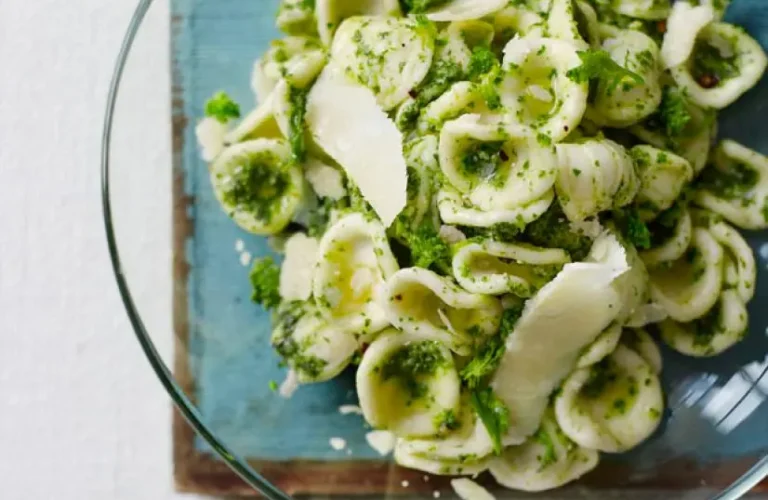
Anne Burrell Orecchiette with Broccoli Rabe Pesto is a quick vegetarian dinner made with pistachios, ricotta and parmigiano, ready in just 30 minutes. That makes it an easy pick for weeknight meals, summer potlucks or pasta nights, since the pesto comes together in a food processor.
The key step is blanching broccoli rabe for just one to two minutes in salted boiling water, because that brief cook tames its bitterness. The ice bath that follows locks in a bright green color, and skipping it would let the greens turn muddy.
Most broccoli rabe pastas saute the greens with garlic and oil, but this version purees them into a thick pistachio pesto. Loosening that pesto with starchy pasta water in the skillet builds a creamy sauce that clings to each orecchiette.
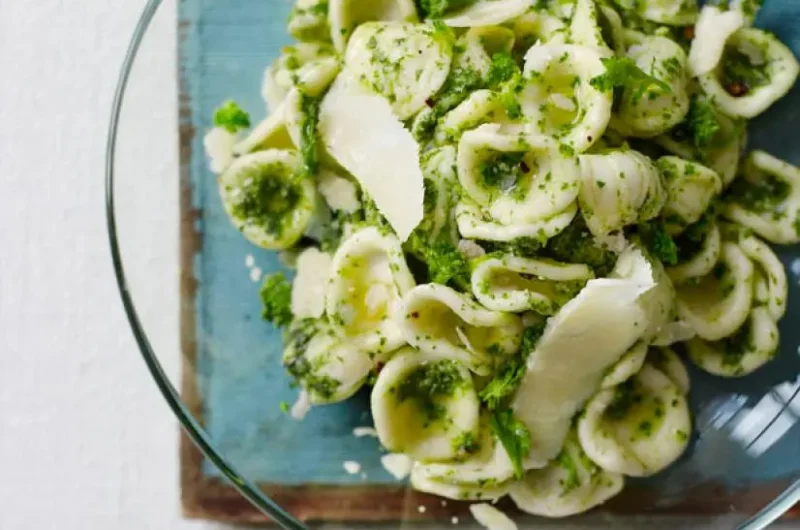
Anne Burrell Orecchiette with Broccoli Rabe Pesto
Course: DinnerCuisine: AmericanDifficulty: Easy4
servings20
minutes12
minutes465
kcalA vegetarian pasta that blends blanched broccoli rabe, toasted pistachios and sharp parmigiano into a thick, nutty pesto. Tossed with orecchiette and starchy cooking water, it comes together fast in one skillet for an easy Italian meal.
Ingredients
1 bunch broccoli rabe, tough lower stems removed
1/2 cup pistachios, toasted
3/4 cup grated parmigiano-reggiano cheese, plus more for garnish
Kosher salt
1/4 cup part-skim ricotta cheese
1/2 pound orecchiette pasta
High-quality extra-virgin olive oil, for finishing (optional)
Directions
- Blanch the broccoli rabe: Bring a large pot of well-salted water to a boil and set up a bowl of salted ice water. Cook the broccoli rabe for 1 to 2 minutes, then immediately plunge it into the ice water to stop the cooking and set the green color.
- Make the pesto:Drain the broccoli rabe and squeeze out excess water, then coarsely chop. Puree in a food processor until it forms a coarse paste. Add the pistachios and parmigiano and puree until smooth. Season with salt, add the ricotta and pulse until combined.
- Cook the pasta:Bring a large pot of well-salted water to a boil (or reuse the blanching water). Cook the orecchiette 1 minute less than the package directions.
- Combine and finish: Place the pesto in a large skillet and add 1 to 1 1/2 cups of pasta cooking water over medium-high heat. Drain the pasta and add it to the skillet. Stir vigorously and cook until the sauce is creamy, 1 to 2 minutes. Finish with olive oil if desired and garnish with more parmigiano.
FAQs
Why does broccoli rabe need blanching and an ice bath?
Broccoli rabe has a natural bitterness that some people find strong, so blanching it briefly in well-salted water softens that edge before blending. The ice bath stops the cooking right away and keeps the greens vibrant instead of letting them turn drab. Together those two steps give the pesto a milder, brighter flavor that pairs well with the creamy ricotta.
What nuts can I use instead of pistachios?
Pine nuts or walnuts both work well as a swap for pistachios, since they blend to a similar creamy texture in the food processor. Almonds are another option, though they produce a slightly grainier result that some people actually prefer. Toast whatever nut you choose first to bring out more depth and subtle sweetness in the finished pesto.
Why is pasta water important for this sauce?
Saving a cup or two of starchy pasta water before draining is the trick to a sauce that coats rather than clumps. The starch acts as a natural thickener, so when you stir it into the pesto over heat it emulsifies smoothly. Without it the pesto stays too thick and pastes onto the shells unevenly.
What pasta shapes work if I cannot find orecchiette?
Gemelli, cavatelli or fusilli all catch thick pesto in their grooves the same way orecchiette does, so any of those will work. Penne is fine in a pinch, though the sauce tends to pool inside the tubes rather than coat the outside. Choose a short shape over long strands so the pesto distributes well.
Can I make the pesto ahead of time?
You can make the pesto up to two days ahead and store it in the fridge with olive oil on top. Cook the pasta fresh when you are ready to serve, since reheated pasta loses its bite and turns soft. Toss cold pesto into a hot skillet with pasta water and it will loosen right back up.