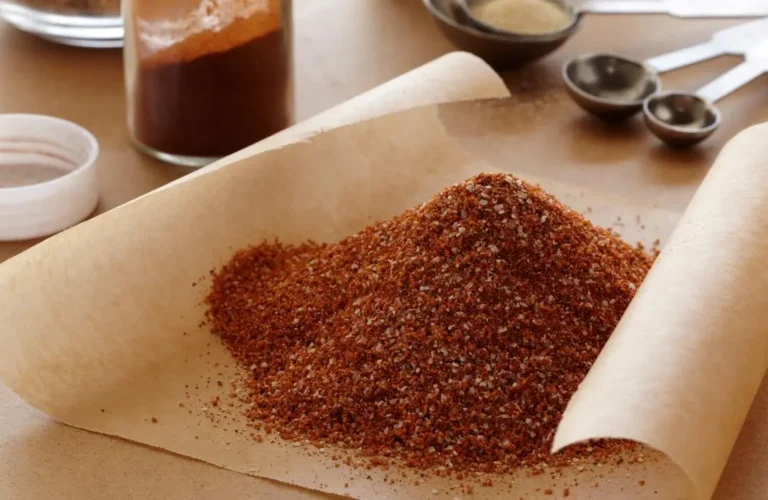
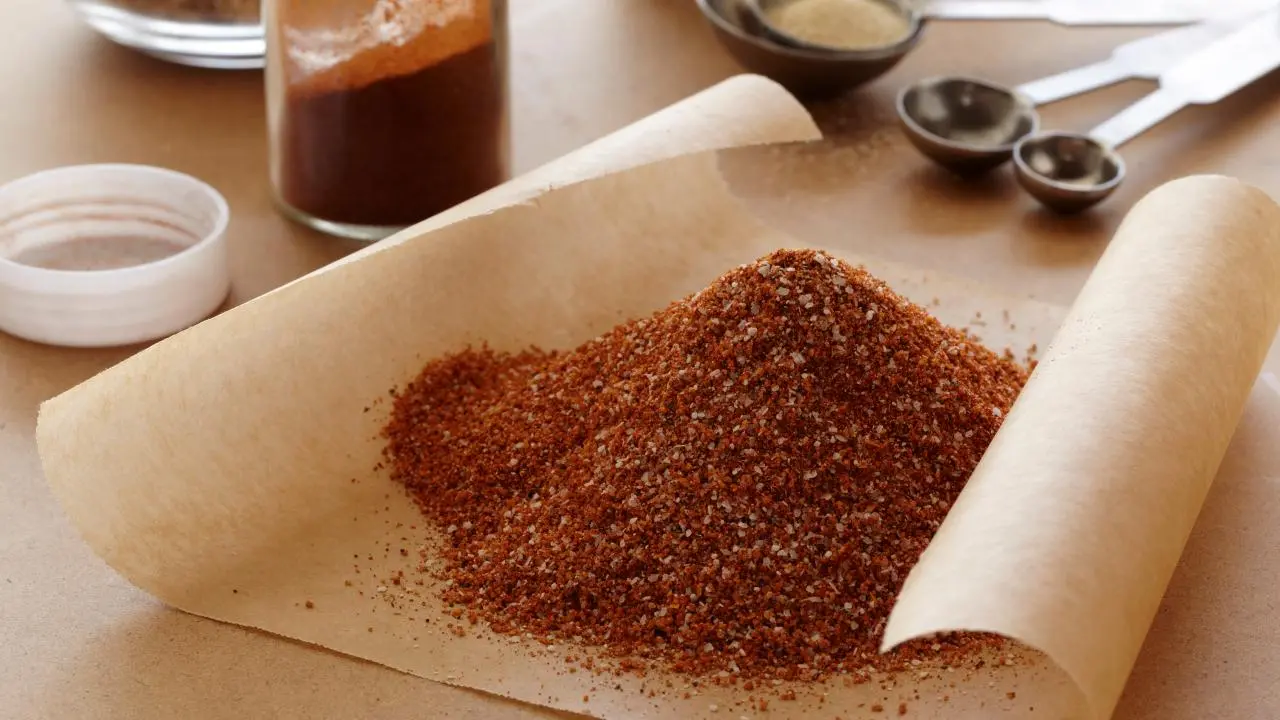
Central BBQ Rib Dry Rub is an easy 10 ingredient spice blend made with cumin, paprika and brown sugar, ready in 10 minutes. One batch makes about 9 tablespoons, enough for four servings. It keeps in an airtight jar for months.
This is the rub from Central BBQ in Memphis, which Bobby Flay featured on an episode called What’s the Rub. Three different peppers go in, black, white and cayenne, where most rubs use one. White pepper is the one nobody expects, and it brings a dusty heat that sits behind the others.
There is only one tablespoon of brown sugar in the whole batch, and that restraint is deliberate. Sugar burns long before ribs are done, so a sweeter rub blackens on the grill instead of crusting. Save the sweetness for a sauce brushed on at the end.
4
servings30
minutes300
kcalGranulated garlic and onion are coarser than the powdered kind, so they cling to wet meat instead of clumping. The whole batch comes to nine tablespoons, which is a little over half a cup once it is mixed.
Ingredients
- Makes about 9 tablespoons:
1 tablespoon cumin
1 tablespoon paprika
1 tablespoon granulated garlic
1 tablespoon granulated onion
1 tablespoon chili powder
1 tablespoon brown sugar
2 tablespoons kosher salt
1 teaspoon cayenne pepper
1 teaspoon black pepper
1 teaspoon white pepper
Directions
- Combine everything: Measure all ten ingredients into a large bowl.
- Mix well: Stir thoroughly so the brown sugar and salt are evenly distributed through the spices, with no pockets of either.
- Store it: Transfer to an airtight container and keep it away from heat and light.
- Pack it on: Pack the dry rub onto your next rack of ribs, pressing it into the meat rather than sprinkling it over.
Food Network notes that this recipe came from a restaurant and has not been tested for home use. No nutrition is published, so the calorie figure is estimated per serving of rub.
One label on this recipe is flatly wrong, and it matters.
FAQs
Food Network tags this low sodium. Is it?
Two tablespoons of kosher salt across nine tablespoons of rub puts roughly 900 mg of sodium in each serving. That is not low sodium by any definition, and the tag looks like an error in their system. Halve the salt if you are watching it, since nothing else in the blend depends on it.
What is granulated garlic, and can I use garlic powder?
Granulated garlic is ground to a sandy texture, while powder is milled to dust. Powder works but tends to clump into pasty spots on damp ribs, so use about three quarters of the amount. The same applies to the onion.
How much rub does one rack need?
Nine tablespoons covers roughly two racks of baby backs, which is where the four servings come from. Pack it on, do not sprinkle, and expect a visible layer rather than a dusting. Any that falls off during cooking was never going to stick anyway.
How long before cooking should I apply it?
Picture the rub going on an hour ahead: the salt pulls moisture to the surface, then draws it back in seasoned. Overnight in the fridge is better still for a full rack. Applying it as the grill heats works, though you get seasoning on the outside rather than through.
How long does the jar keep?
Store it airtight away from the stove and it stays good six months, though the paprika fades first. Ground spices do not spoil, they just go flat, so smell the jar before you trust an old batch. It suits a slow baked rack like these smoky chipotle BBQ ribs.
Does it work on anything besides ribs?
Rubbing it onto chicken thighs, pork shoulder or brisket works without changing a thing, since nothing in it is rib-specific. Go lighter on fish and shrimp, where the cayenne and salt overwhelm fast. It sits well on a thick cut too, as these bourbon glazed pork chops show.