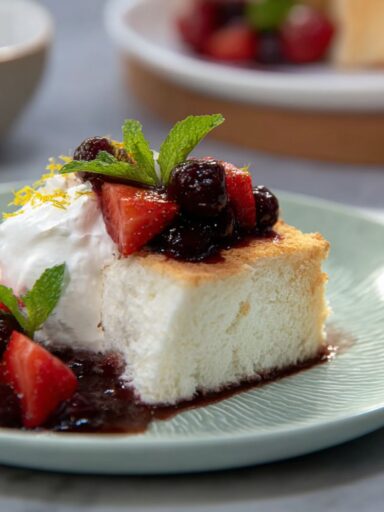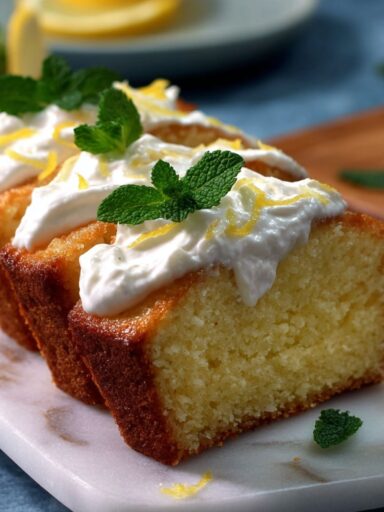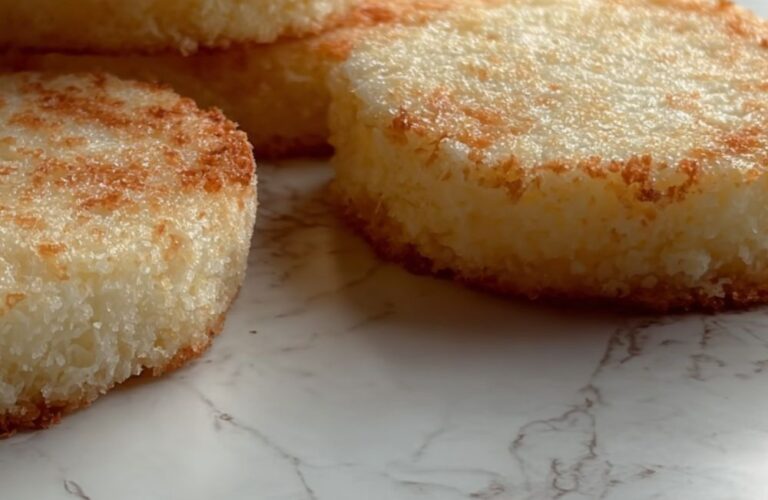
This Classic Sponge Cake Recipe is a light and fluffy recipe, which is made with whipped eggs and warm milk. It’s a classic, foolproof recipe, ready in about 1 hour (including cooling).
Jump to RecipeClassic Sponge Cake Recipe Ingredients
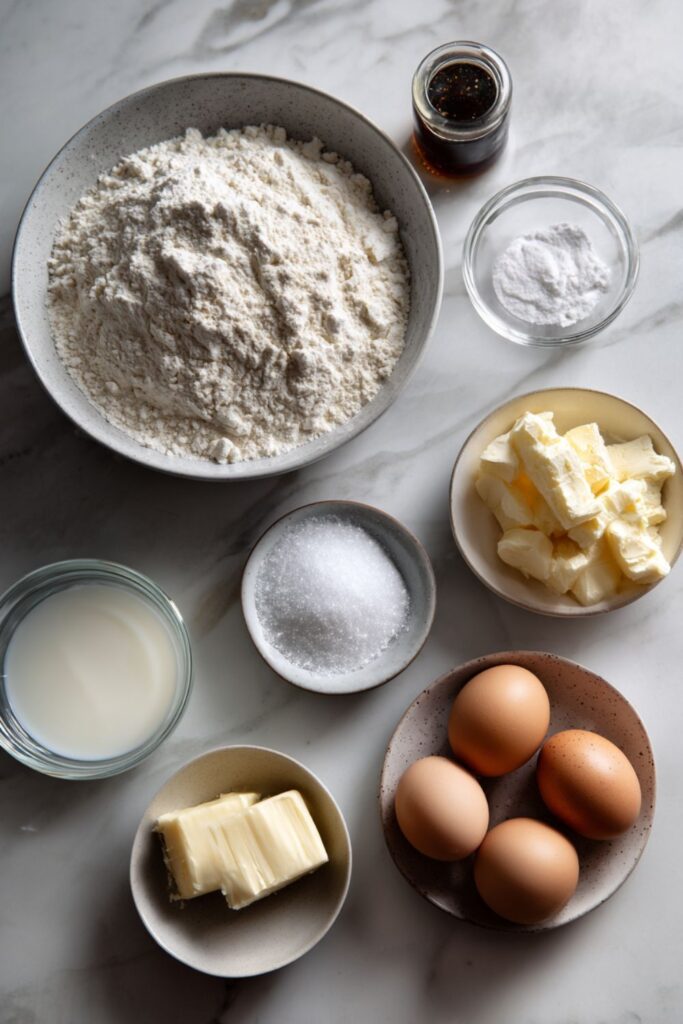
- 1 cup all-purpose flour
- 1 teaspoon baking powder
- 1/8 teaspoon salt
- 1 cup plus 2 tablespoons sugar, divided
- 8 large eggs
- 1/2 cup milk
- 2 teaspoons plus 2 tablespoons unsalted butter, divided
- 1 teaspoon pure vanilla extract
How To Make Classic Sponge Cake
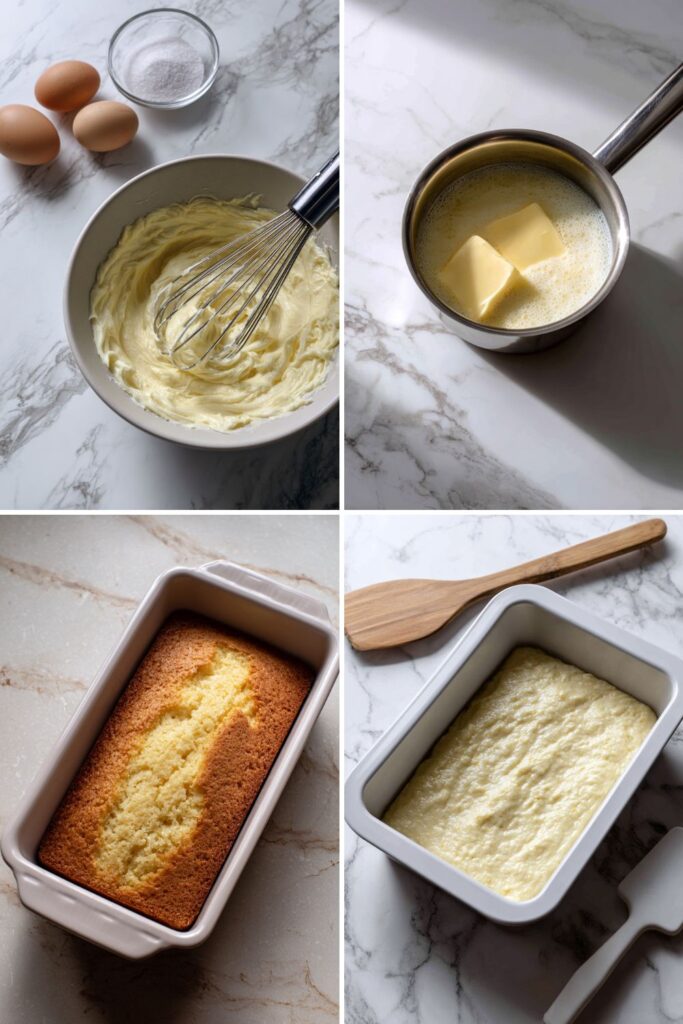
- Prep Oven and Pan: Preheat the oven to 350°F. Use 2 tablespoons of the butter to generously grease a 17×12-inch baking pan or jelly-roll pan. Sprinkle the greased pan evenly with the remaining 2 tablespoons of sugar.
- Warm the Milk: In a small saucepan over medium-low heat, warm the milk and the remaining 2 teaspoons of butter together until the butter has melted and the mixture is warm.
- Whip the Eggs: In the large bowl of an electric mixer with the whisk attachment, beat the eggs and 1 cup of the sugar on medium-high speed for about 8 minutes. The mixture should be pale yellow, very thick, and have tripled in volume.
- Combine the Batter: With the mixer on low speed, slowly pour the warm milk mixture into the whipped eggs. In a separate bowl, sift together the flour, baking powder, and salt. Add half of the flour mixture to the egg mixture and blend until just smooth, then repeat with the other half. Gently mix in the vanilla.
- Bake and Cool: Pour the batter into the prepared pan, spreading it into an even layer. Bake for about 15 minutes, until the cake springs back when lightly touched. Let the cake cool in the pan for about 2 minutes, then carefully invert it onto a large sheet of parchment paper to cool completely.
Recipe Tips
- Why whip the eggs for so long? Beating the eggs and sugar for the full 8 minutes is the most important step! This is what whips an incredible amount of air into the batter, making the cake rise and giving it its signature light, “spongy” texture.
- Why coat the pan with sugar? Using sugar instead of flour to dust the pan is a classic technique for sponge cakes. It stops the cake from sticking while also creating a delicate, slightly crisp, sweet crust on the outside.
- How do I avoid a flat, tough cake? Do not overmix the batter. When you add the flour, mix on the lowest speed (or fold by hand) only until the flour disappears. Overmixing will deflate all the air you just whipped into the eggs and will make the cake tough.
- Why warm the milk and butter? This is a “hot milk” style sponge. Adding the warm liquid to the whipped eggs helps create a very tender, moist, and stable crumb that won’t dry out.
What To Serve With Classic Sponge Cake
This thin, flexible sponge is the perfect base for rolled cakes or trifles.
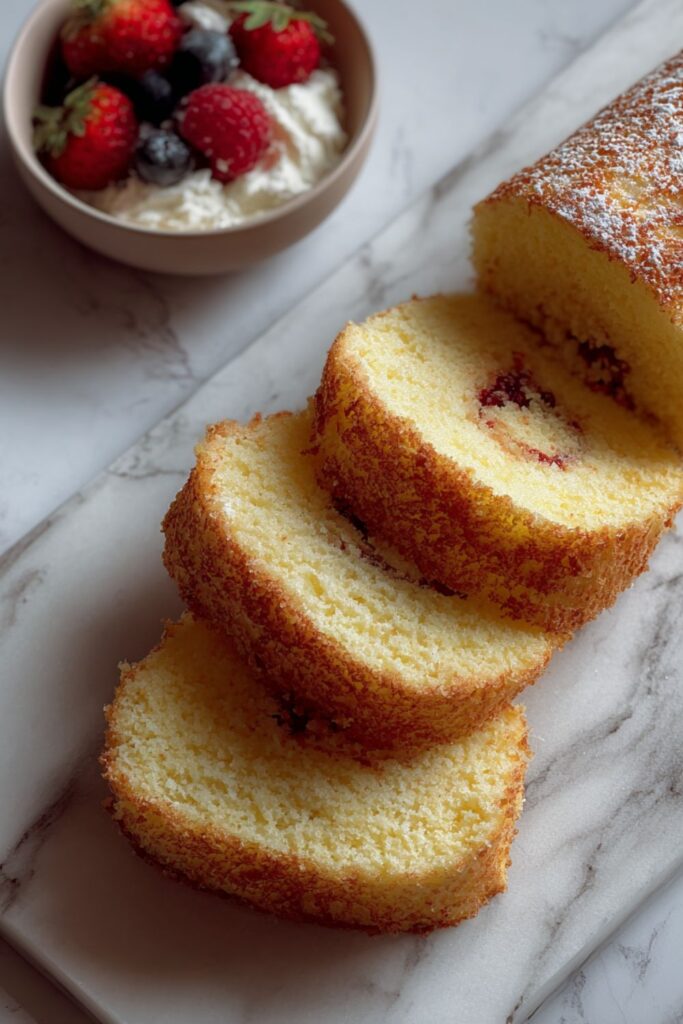
- Jelly Roll: Spread the cooled cake with jam (like raspberry or strawberry) and roll it into a log. Dust with powdered sugar.
- Swiss Roll: Spread with whipped cream and fresh berries, then roll.
- Trifle: Cut the cake into cubes and use it as the base layer in a trifle with custard, fruit, and cream.
How To Store Classic Sponge Cake
- Room Temperature: Store the unfilled cake (or jelly roll) tightly wrapped in plastic wrap at room temperature for up to 3 days.
- Refrigerate: If you fill the cake with whipped cream, it must be stored in the refrigerator.
- Freeze: This sponge cake freezes perfectly. Wrap the cooled, unfilled cake in two layers of plastic wrap and freeze for up to 3 months. Thaw at room temperature before filling.
Classic Sponge Cake Nutrition Facts
(Per serving, assuming 12 servings)
- Calories: ~180 kcal
- Total Fat: 6g
- Saturated Fat: 3g
- Cholesterol: 130mg
- Sodium: 140mg
- Total Carbohydrate: 27g
- Dietary Fiber: 0.5g
- Sugars: 18g
- Protein: 5g
Nutrition information is estimated and may vary based on ingredients and cooking methods used.
FAQs
This recipe is designed for a thin 17×12-inch jelly-roll pan. If you use 9-inch round pans, the cake will be very thin and may overbake. It’s best to use the pan specified.
You may have overbaked it slightly, or you didn’t roll it while it was still warm. For a jelly roll, you should invert the hot cake onto a towel dusted with powdered sugar, spread your filling, and roll it up while it’s still warm and pliable.
All-purpose flour works perfectly for this recipe. You can use cake flour, which will result in an even more tender and delicate sponge.
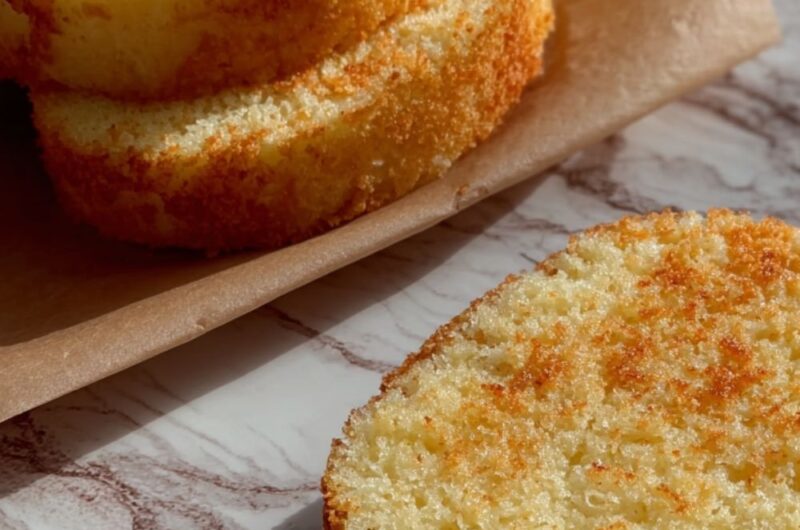
Classic Sponge Cake Recipe
Course: DessertCuisine: AmericanDifficulty: Easy12
servings20
minutes15
minutes180
kcalA light, airy, and flexible classic sponge cake made with whipped eggs and warm milk, perfect for making a jelly roll or a trifle.
Ingredients
1 cup all-purpose flour
1 teaspoon baking powder
1/8 teaspoon salt
1 cup plus 2 tablespoons sugar, divided
8 large eggs
1/2 cup milk
2 teaspoons plus 2 tablespoons unsalted butter, divided
1 teaspoon pure vanilla extract
Directions
- Preheat oven to 350°F. Grease a 17×12-inch jelly-roll pan with 2 tbsp butter. Sprinkle with 2 tbsp sugar.
- In a small pan, warm the milk and 2 tsp butter until the butter melts; keep warm.
- In a large mixer bowl, beat the 8 eggs and 1 cup of sugar on medium-high speed for 8 minutes, until very thick and tripled in volume.
- On low speed, slowly pour the warm milk into the eggs.
- Sift the flour, baking powder, and salt. Add the flour mixture in two halves, mixing on low just until combined. Mix in the vanilla.
- Pour the batter into the prepared pan and spread evenly.
- Bake for 15 minutes, until the cake springs back.
- Cool in the pan for 2 minutes, then invert onto a large sheet of parchment paper to cool completely.
Notes
- Beating the eggs for the full 8 minutes is the most important step for a light, spongy texture.
- Do not overmix when adding the flour; fold it in gently to avoid deflating the eggs.
- This cake is thin by design. It’s perfect for rolling.