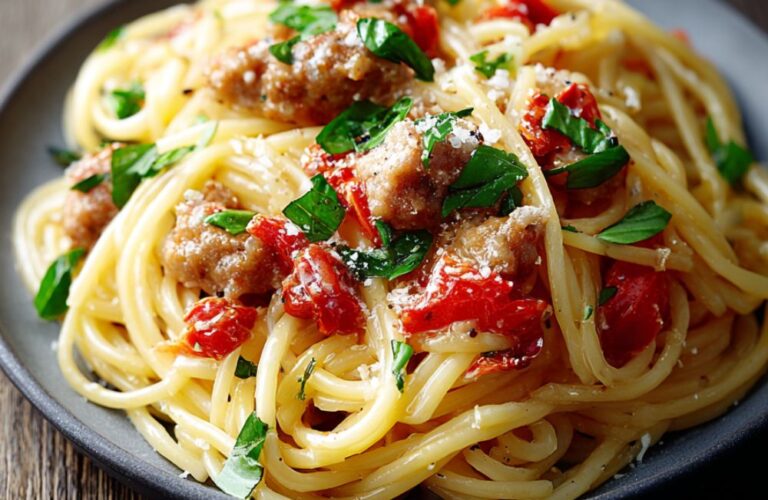
This Four Cheese Pasta Recipe is inspired by the classic Italian “Pasta ai Quattro Formaggi,” but with a bright, tomato-based twist. It is a creamy and savory recipe, which calls for a blend of mozzarella, parmesan, romano, and ricotta cheeses. It’s a classic, foolproof recipe, ready in about 30 minutes.
Jump to RecipeFour Cheese Pasta Recipe Ingredients
For the Tomato Sauce:
- 4 tsp olive oil
- 4 garlic cloves, minced
- 4 cups crushed tomatoes
- 1 tsp sugar
- Kosher salt, to taste
- Black pepper, to taste
- 1.5 tsp dried basil
- 1 tsp dried oregano
For the Pasta:
- 12 oz penne pasta (or your preferred shape)
The Cheese Mixture:
- 0.33 cup ricotta cheese
- 2 large eggs
- 0.5 cup shredded mozzarella cheese
- 0.375 cup grated parmesan cheese
- 0.125 cup grated romano cheese
- Black pepper, to taste
Whipped Ricotta Topping:
- 0.25 cup ricotta cheese
- 1 tbsp milk
Garnish:
- 2 tbsp chopped fresh basil
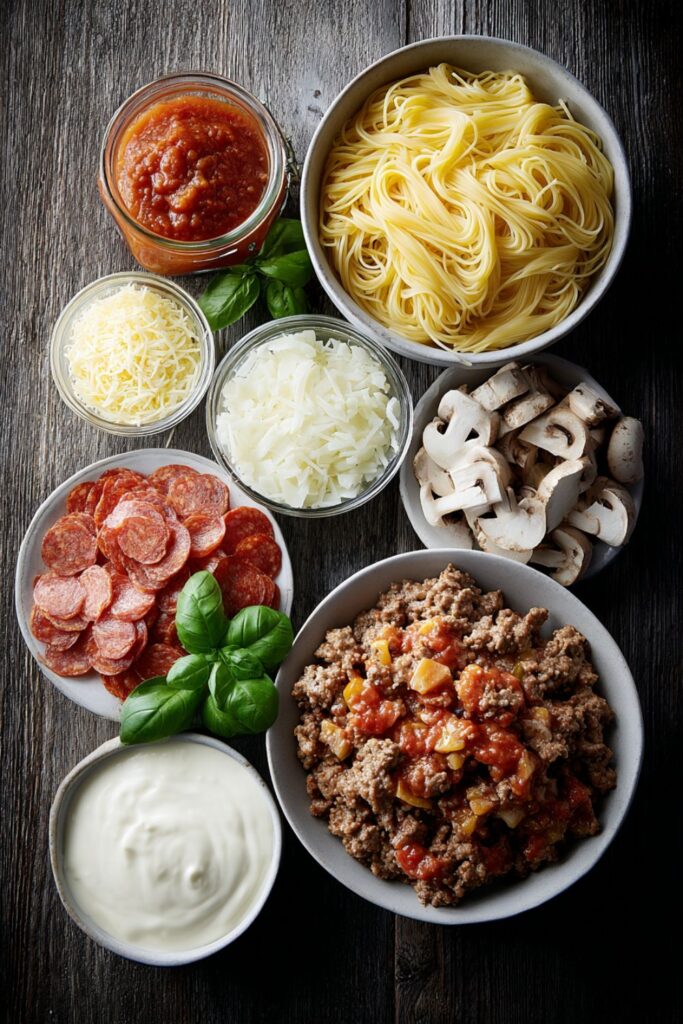
How To Make Four Cheese Pasta
- Start the tomato sauce: Heat the olive oil in a large skillet over medium heat. Add the minced garlic and cook for 1 to 2 minutes until it is fragrant but not browned. Pour in the crushed tomatoes and add the sugar, salt, pepper, dried basil, and dried oregano. Stir well and let the sauce simmer gently for 10 to 12 minutes to allow the flavors to deepen and the sauce to thicken.
- Cook the pasta: While the sauce is simmering, bring a large pot of salted water to a boil. Cook the penne pasta until it is al dente (firm to the bite). Drain the pasta and set it aside.
- Mix the cheeses: In a medium bowl, combine 0.33 cup of ricotta with the eggs, shredded mozzarella, grated parmesan, and grated romano. Season with a generous pinch of black pepper and stir until well combined. In a separate small bowl, whisk together the 0.25 cup of ricotta and the milk until it reaches a smooth, “whipped” consistency. Set this aside for the final topping.
- Temper and finish the sauce: Once the tomato sauce has finished simmering, lower the heat. Slowly stir the main cheese and egg mixture into the hot tomato sauce. Continue stirring until the cheeses melt and the eggs emulsify into the sauce, creating a rich, creamy, and orange-tinted pink sauce.
- Combine with pasta: Add the cooked penne to the skillet. Toss everything together until every tube of pasta is thoroughly coated in the velvety four-cheese sauce.
- Garnish and serve: Spoon the pasta into warm bowls. Top each serving with a dollop of the whipped ricotta mixture and a sprinkle of fresh chopped basil. Serve immediately while the cheese is at its most molten.
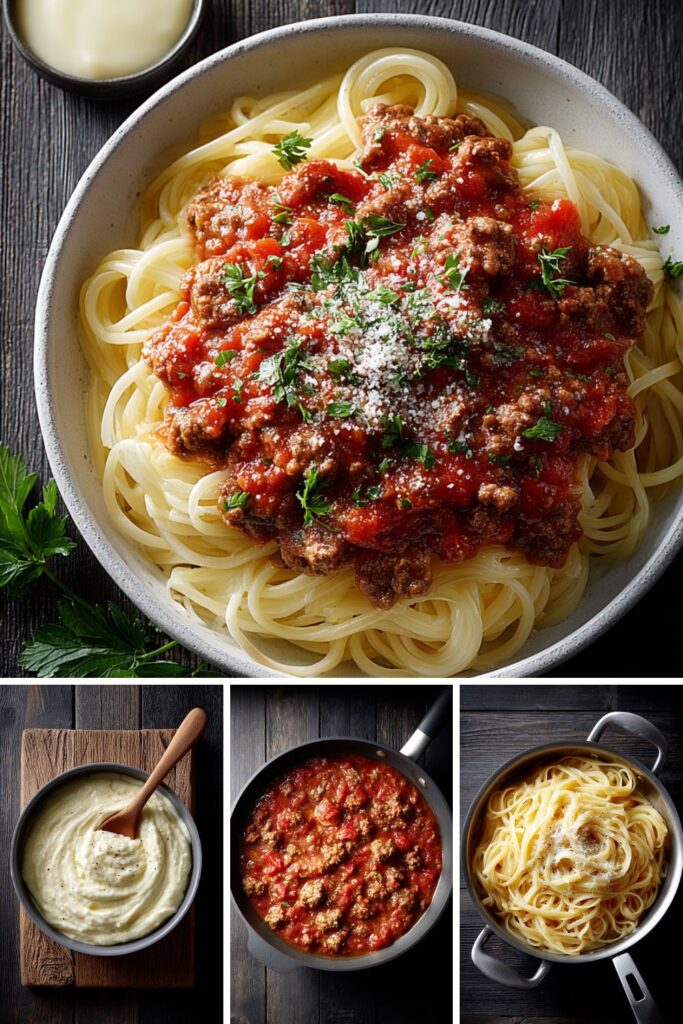
Recipe Tips
- Why use eggs in the sauce: The eggs act as a binder and an emulsifier, helping the cheese and tomatoes blend into a perfectly smooth, custard-like sauce rather than just having clumps of melted cheese.
- The secret to the topping: Whisking the ricotta with a little milk lightens the texture, making it feel like a sophisticated garnish that provides a cool contrast to the hot pasta.
- Choosing the right pasta: Penne is the best choice for this recipe because the hollow centers catch the thick cheese sauce, ensuring you get plenty of flavor in every single bite.
- How to prevent curdling: Make sure the tomato sauce is at a low simmer, not a rolling boil, when you add the cheese mixture. High heat can cause the eggs or cheese to separate.
What To Serve With Four Cheese Pasta?
This Four Cheese Pasta Recipe is a rich, savory main dish that needs a fresh or crunchy pairing! A side of Warm Garlic Bread or a few Garlic Knots is the quintessential choice for dipping into the extra creamy sauce. For a balanced meal, a side of Honey Mustard Tossed Salad or a classic Caesar Salad adds a lovely crispness that pairs perfectly with the melted cheeses! A glass of Sparkling Grape Juice or a serving of Roasted Asparagus pairs wonderfully with the bright, aromatic notes of the basil and oregano.
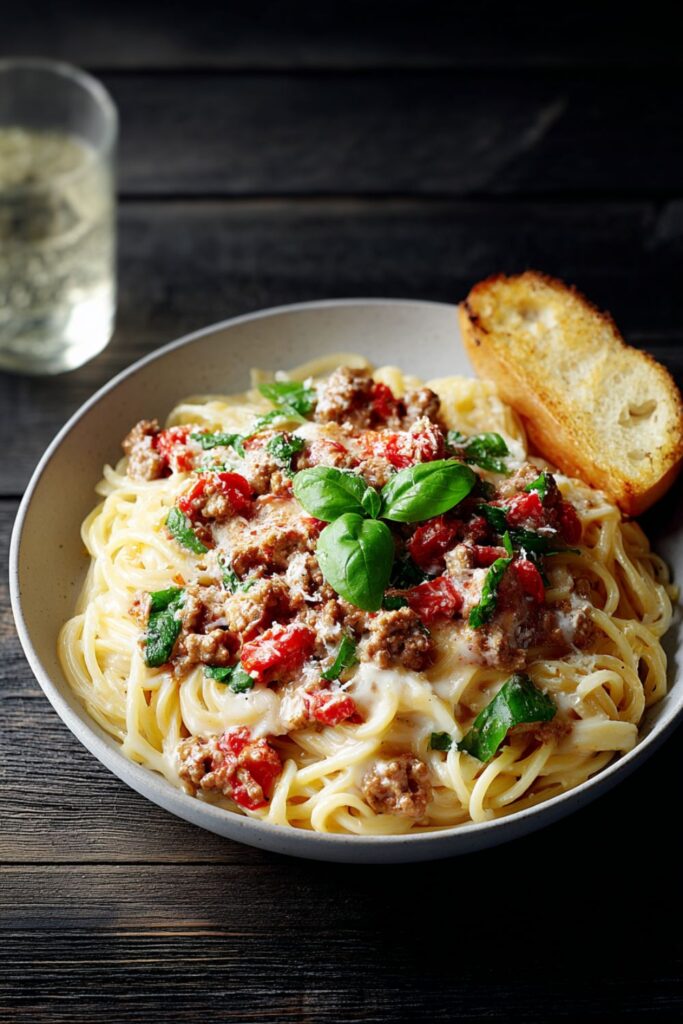
How To Store Four Cheese Pasta
- Refrigerate: Store leftovers in an airtight container in the fridge for up to 3 days.
- Reheating: Because of the egg and cheese in the sauce, it is best to reheat this gently on the stovetop with a splash of milk or water to bring the creaminess back to life.
- Avoid Freezing: We do not recommend freezing this pasta. The ricotta and egg-based sauce may become grainy or watery once thawed and reheated.
Four Cheese Pasta Nutrition Facts
- Calories: 450 (per serving)
- Total Fat: 22 g
- Cholesterol: 95 mg
- Sodium: 640 mg
- Total Carbohydrates: 42 g
- Dietary Fiber: 3 g
- Protein: 18 g
Nutrition information is estimated and may vary based on ingredients and cooking methods used.
FAQs
Yes. If you don’t have Romano, you can use extra Parmesan. If you want a sharper flavor, a little bit of Fontina or Asiago works beautifully in the mixture.
A small amount of sugar is the professional secret to balancing the natural acidity of canned tomatoes, making the sauce taste more well-rounded and “restaurant-quality.”
Yes, this is a naturally vegetarian pasta dish.
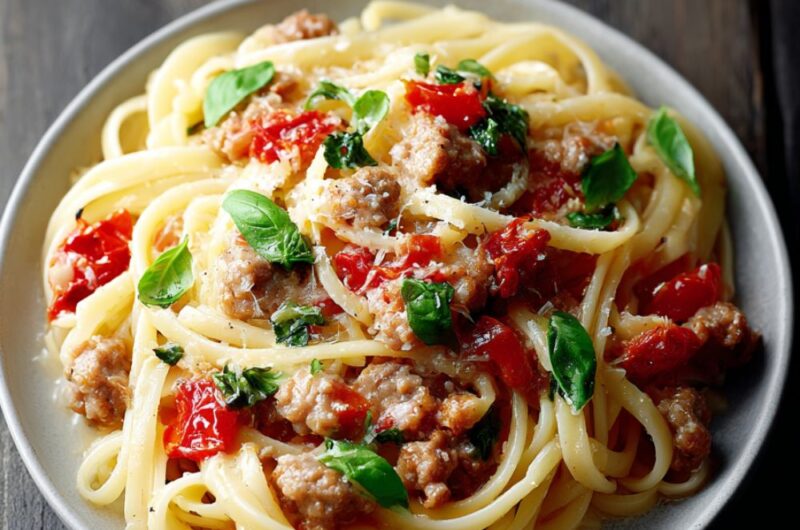
Four Cheese Pasta Recipe
Course: DinnerCuisine: Italian-AmericanDifficulty: Easy4
servings10
minutes20
minutes450
kcalA velvety penne pasta dish featuring a homemade tomato sauce blended with a rich mixture of ricotta, mozzarella, parmesan, and romano cheeses.
Ingredients
12 oz penne pasta
4 cups crushed tomatoes and 4 garlic cloves
0.33 cup + 0.25 cup ricotta
0.5 cup mozzarella and 0.375 cup parmesan
0.125 cup romano and 2 eggs
Basil, oregano, sugar, salt, and pepper
Directions
- Sauté garlic in oil; add tomatoes and spices and simmer for 12 minutes.
- Boil the pasta in salted water until al dente; drain and set aside.
- Mix 0.33 cup ricotta, eggs, mozzarella, parmesan, and romano in a bowl.
- Whisk 0.25 cup ricotta with milk for the topping.
- Stir the cheese mixture into the tomato sauce until smooth and creamy.
- Toss the pasta into the sauce until thoroughly coated.
- Serve hot, topped with whipped ricotta and fresh basil.
Notes
- Using a blend of four cheeses is the best way to achieve a complex, savory depth that mozzarella alone cannot provide.
- Adding the eggs to the cheese mixture is the secret to a professional-grade emulsion that stays creamy on the plate.
- Salting the pasta water “aggressively” is essential to ensure the noodles are seasoned from the inside out.