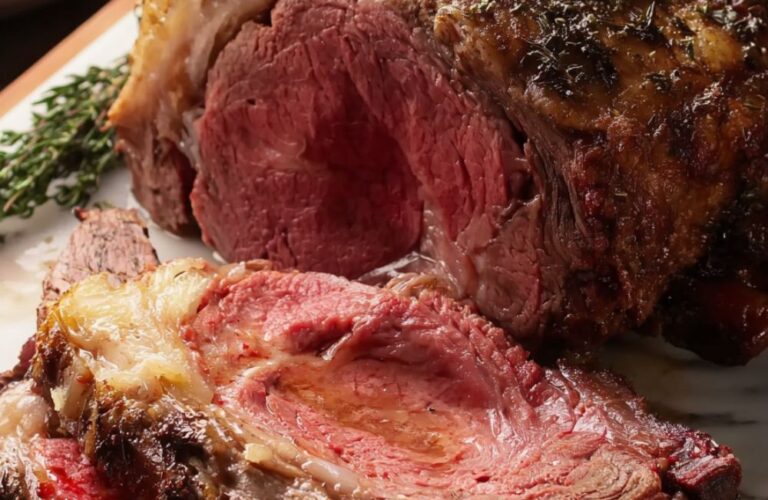
This dramatic Kosher Salt Encrusted Prime Rib Roast Recipe uses an ancient culinary technique to deliver the juiciest, most tender meat imaginable. By burying the beef in a mound of coarse kosher salt and slow-roasting it at a low temperature, you create a kiln-like environment that seals in natural juices while seasoning the roast to perfection without making it overly salty.
Jump to RecipeKosher Salt Encrusted Prime Rib Roast Ingredients
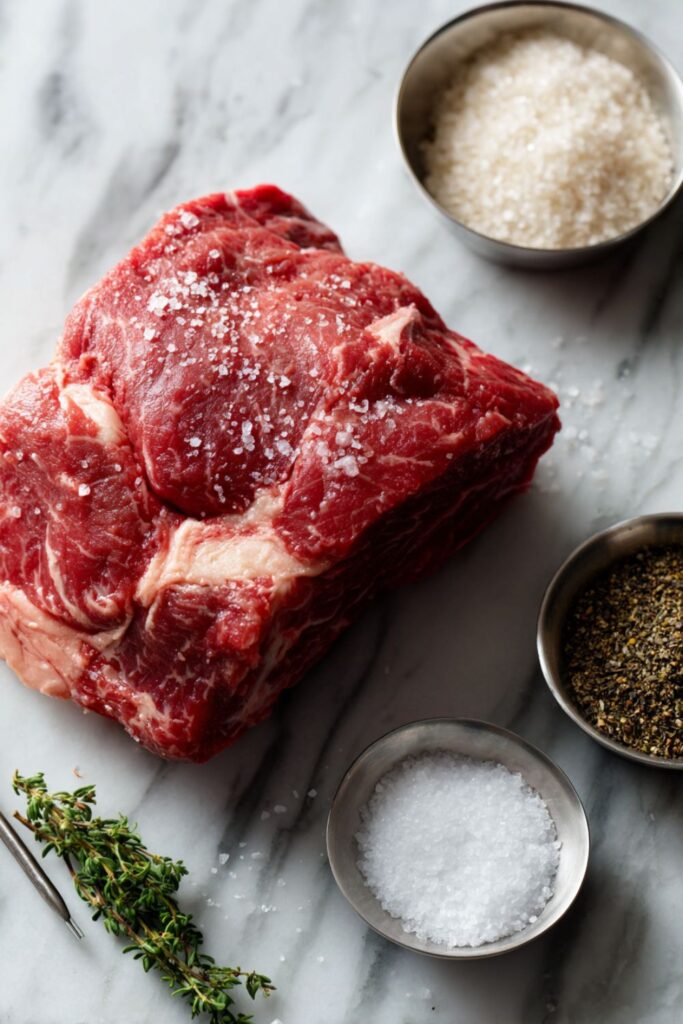
- 2 cups Coarse Kosher Salt: This is the structural element of the recipe. Do not use table salt; the grains are too fine and will make the meat inedible. You need the large, coarse grains to form a crust.
- 4 pounds Prime Rib Roast: Ideally bone-in. This cut is heavily marbled and benefits from the slow roasting method.
- 1 tablespoon Ground Black Pepper: Provides a spicy contrast to the richness of the beef.
- 1 tablespoon Seasoning Salt: Adds a layer of savory herbs and spices directly to the meat surface before the salt crust is applied.
- Roasting Pan: Needs to be deep enough to contain the salt and juices.
- Meat Thermometer: Essential for this slow-roasting method to ensure food safety and desired doneness.
How To Make Kosher Salt Encrusted Prime Rib Roast
- Preheat: Preheat your oven to 210°F (100°C). This very low temperature is the secret to even cooking from edge to edge.
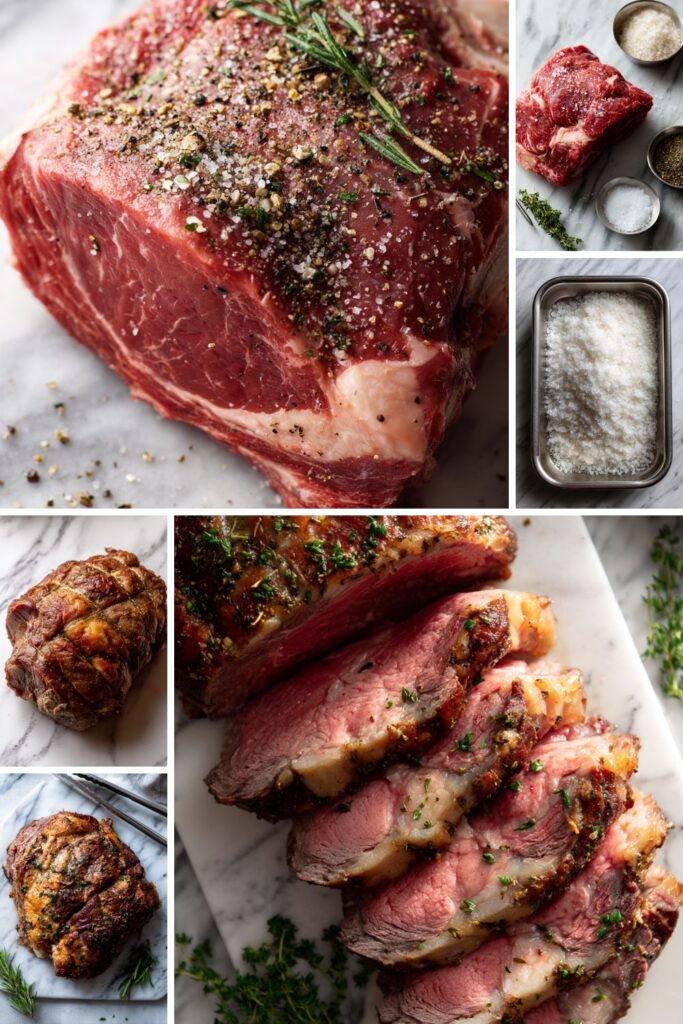
- Prepare the Bed: Cover the bottom of a roasting pan with a layer of the coarse kosher salt. This prevents the bottom of the roast from scorching and starts the encasement process.
- Season the Meat: Place the roast, bone side down, onto the bed of salt. Rub the meat thoroughly with the ground black pepper and the seasoning salt.
- Encase: Pour the remaining kosher salt over the roast, covering it completely. Pat the salt down gently to ensure it adheres and forms a shell.
- Slow Roast: Bake in the preheated oven for 4 to 5 hours. The cooking time will vary depending on the shape of your roast.
- Check Temperature: Roast until the internal temperature reaches 145°F (63°C) for a medium doneness. Insert the thermometer through the salt crust into the thickest part of the meat, avoiding the bone.
- Rest and Serve: Remove from the oven and let rest for 30 minutes. This is critical for juice retention. Crack the salt crust, remove all salt from the exterior of the roast, carve, and serve.
Recipe Tips
- Removing the Crust: The salt will harden into a shell. You may need to crack it with the back of a knife or a mallet. Brush away every grain of salt before slicing to avoid an overly salty bite.
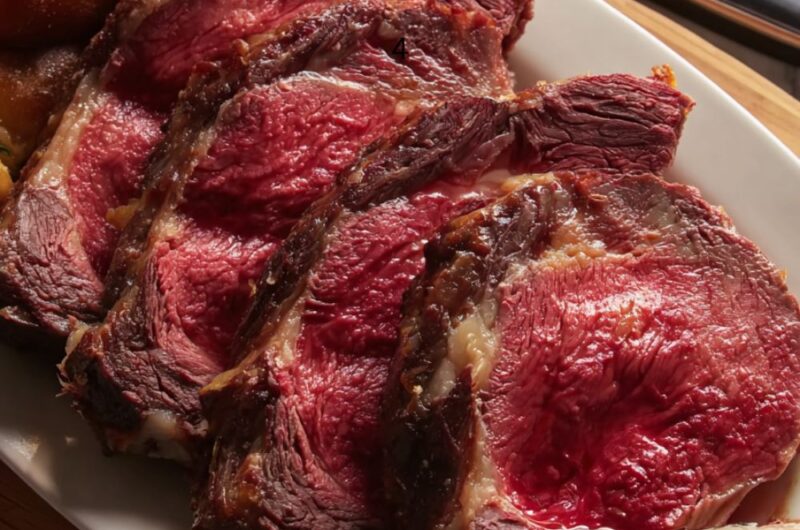
- Doneness Adjustments: The original recipe calls for 145°F (Medium). If you prefer Medium-Rare, start checking the temperature around the 3.5-hour mark and pull it when it reaches 130°F-135°F, as the temperature will rise slightly while resting.
- Bone-In vs. Boneless: If using a boneless ribeye roast, reduce the cooking time slightly, as bones act as insulators.
- Moisture Lock: Do not open the oven door frequently. At 210°F, heat escapes quickly, which can significantly delay the cooking process.
What To Serve With Prime Rib
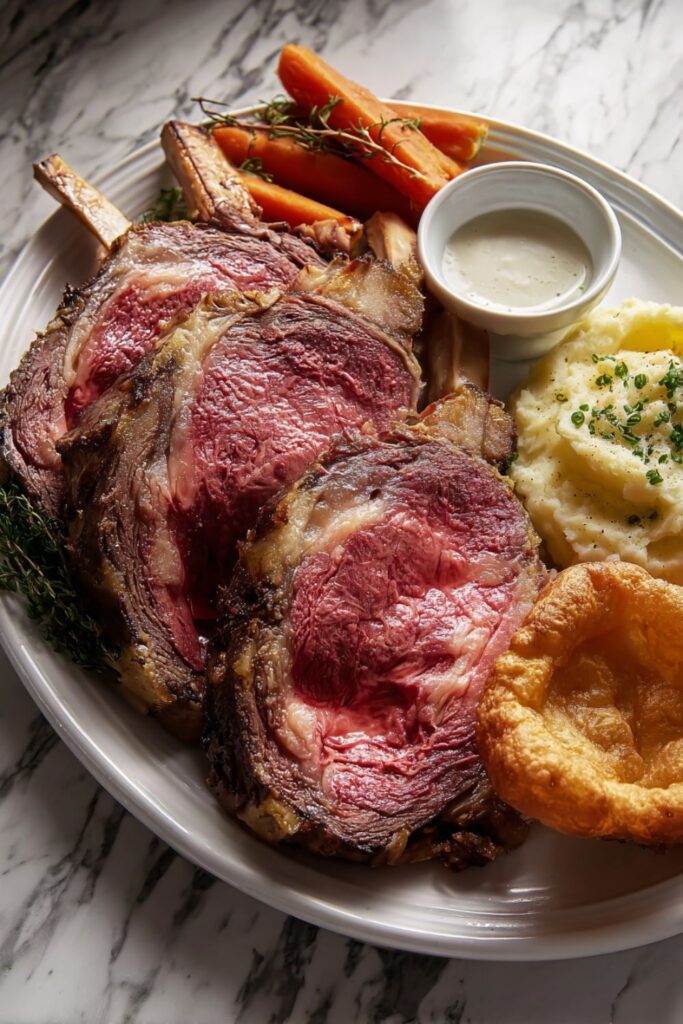
- Horseradish Cream: A spicy, cool sauce cuts through the rich fat of the prime rib.
- Roasted Garlic Mashed Potatoes: The creamy texture complements the tender beef.
- Yorkshire Pudding: A classic English side dish that soaks up any jus.
- Glazed Carrots: Adds a touch of sweetness and color to the plate.
How To Store Prime Rib
- Refrigerate: Store leftover meat (salt removed) wrapped tightly in plastic wrap or in an airtight container for 3-4 days.
- Freeze: Slice the leftovers and freeze in airtight bags for up to 3 months.
- Reheating: Reheat gently in a low oven with a splash of beef broth to prevent drying out.
Prime Rib Nutrition Facts
- Calories: 391 kcal
- Fat: 26g
- Carbohydrates: 1g
- Protein: 36g
- Nutrition information is estimated per serving based on 6 servings.
FAQs
Surprisingly, no. The physics of the salt crust draws moisture out initially, which dissolves a little salt, but then forms a hard shell that steams the meat in its own juices. Only the outer edge gets seasoned.
Roasting at 210°F (100°C) allows the enzymes in the meat to break down connective tissue without squeezing out moisture, resulting in a texture similar to sous-vide cooking.
Not for this method. The salt crust creates a different type of exterior texture. If you sear it first, the salt won’t adhere as well to the raw surface.
Kosher Salt Encrusted Prime Rib Roast Recipe
Course: DinnerCuisine: AmericanDifficulty: Easy6
servings10
minutes5
minutes391
kcalThis dramatic Kosher Salt Encrusted Prime Rib Roast Recipe uses an ancient culinary technique to deliver the juiciest, most tender meat imaginable. By burying the beef in a mound of coarse kosher salt and slow-roasting it at a low temperature, you create a kiln-like environment that seals in natural juices.
Ingredients
2 cups coarse kosher salt
4 pounds prime rib roast (bone-in recommended)
1 tablespoon ground black pepper
1 tablespoon seasoning salt
Directions
- Preheat oven to 210°F (100°C).
- Cover the bottom of a roasting pan with a layer of kosher salt.
- Place roast bone-side down on salt and season with pepper and seasoning salt.
- Cover roast completely with the remaining kosher salt.
- Roast for 4 to 5 hours until internal temperature reaches 145°F (63°C).
- Rest for 30 minutes outside the oven.
- Crack crust and brush off all salt before carving.
Notes
- Crucial: Use coarse Kosher salt, not fine table salt.
- Safety: Ensure the thermometer does not touch the bone for an accurate reading.
- Serving: Remove the crust thoroughly; it is not meant to be eaten.