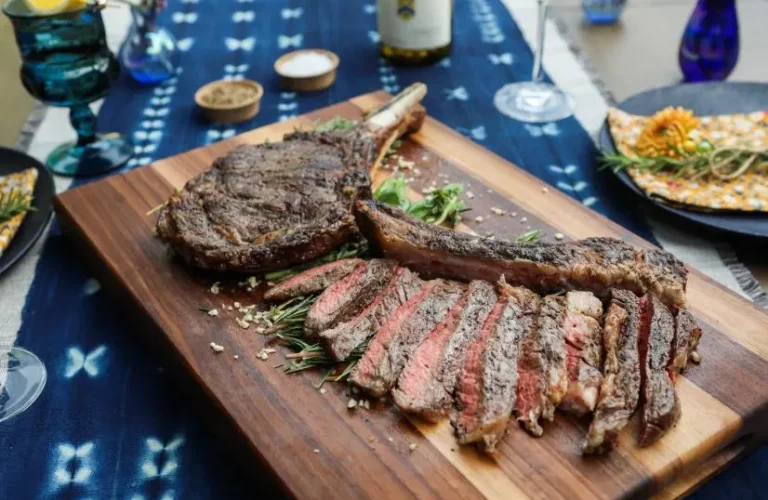
Valerie Bertinelli grilled ribeye is an easy recipe for thick bone-in steaks basted with herbed butter, then rested on a garlic-herb cutting board. That makes it a solid summer dinner or Sunday cookout pick for any gathering, since the whole cook takes under 20 minutes on the grill.
The step that matters is bundling fresh herbs around a metal skewer to make a basting brush, since they infuse the butter on contact. No store-bought brush can do that, which is why the steak picks up so much flavor with every pass.
Most grilled ribeye recipes just season and sear, but this one adds a garlic-butter board where the steak rests after cooking. Slicing directly on that board coats every piece in the herb-garlic mixture, which turns a simple rest into a finishing step.
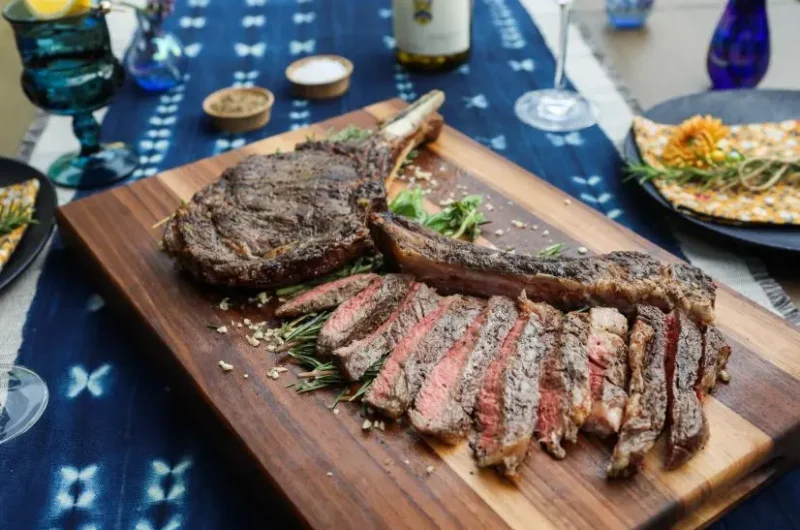
Valerie Bertinelli Grilled Ribeye
Course: DinnerCuisine: AmericanDifficulty: Easy4
servings10
minutes20
minutes1015
kcalBone-in ribeye steaks seasoned with salt and pepper, grilled over two-zone heat with herb-butter basting, then rested and sliced on a garlic board.
Ingredients
- For the Steaks:
2 bone-in ribeye steaks, each about 2 inches thick
2 tablespoons vegetable oil
Kosher salt and freshly ground black pepper
4 tablespoons unsalted butter
2 cloves garlic
- For the Herb Brush:
2 sprigs fresh basil
6 sprigs fresh rosemary
4 sprigs fresh oregano
4 sprigs fresh thyme
One 8-inch metal skewer
Kitchen twine
Directions
- Temper the steaks:Preheat the grill to medium-high (400 degrees F) and set up half for indirect grilling. Pat the steaks dry and let them sit at room temperature for 30 minutes.
- Make the herb brush:Gather the basil, rosemary, oregano and thyme around the tip of the metal skewer. Tie tightly with kitchen twine and trim any long ends.
- Sear on direct heat:Brush the steaks on both sides with vegetable oil and season generously with salt and pepper. Grill on the hot side for 4 minutes. While the steaks cook, melt the butter in a small cast iron skillet on the grill.
- Baste and flip:Flip the steaks and baste with the melted butter using the herb brush. Grill for another 4 minutes, then move to the indirect heat side. Baste once more and cook until an instant-read thermometer reads 125 to 130 degrees F for medium-rare.
- Prepare the garlic board:Finely chop the garlic on a large cutting board with a juice groove. Season with 1/2 teaspoon salt and mash into a paste with the flat side of a knife. Pour the remaining melted butter onto the board and spread it with a fork. Remove the herbs from the brush and lay them on top of the garlic mixture.
- Rest and slice: Place the steaks on top of the herbs and garlic mixture. Rest for 10 minutes. Remove the bone, slice against the grain and serve directly from the board.
FAQs
What is an herb brush and how do I make one?
Gather fresh rosemary, thyme, oregano and basil around an eight-inch metal skewer, then tie them tightly with kitchen twine. The bundle works like a basting brush that transfers herb flavor into the melted butter with every stroke.
Why does this recipe use two-zone grilling?
Direct heat sears the outside quickly for a crust, and indirect heat finishes the inside gently to reach medium-rare without overcooking. Moving the steaks to the cooler side also prevents flare-ups from the butter dripping onto the flames.What temperature should the steak reach for medium-rare?
What temperature should the steak reach for medium-rare?
Pull the steaks off the grill when they hit 125 to 130 degrees on an instant-read thermometer, since they rise a few degrees while resting. For medium, aim for 135 degrees, and for medium-well go to 145.
How does the garlic cutting board work as a finishing step?
Mash garlic with salt into a paste on a board, then spread melted butter over it and lay the loose herbs on top. Resting the steaks on this mixture lets the juices mix with the garlic butter, which coats every slice when you carve.
Can I use a boneless ribeye instead of bone-in?
Boneless ribeye works fine, though it cooks a few minutes faster since there is no bone insulating one side. Check the temperature earlier and pull it at 125 degrees, since a thinner cut can overshoot quickly on a hot grill.