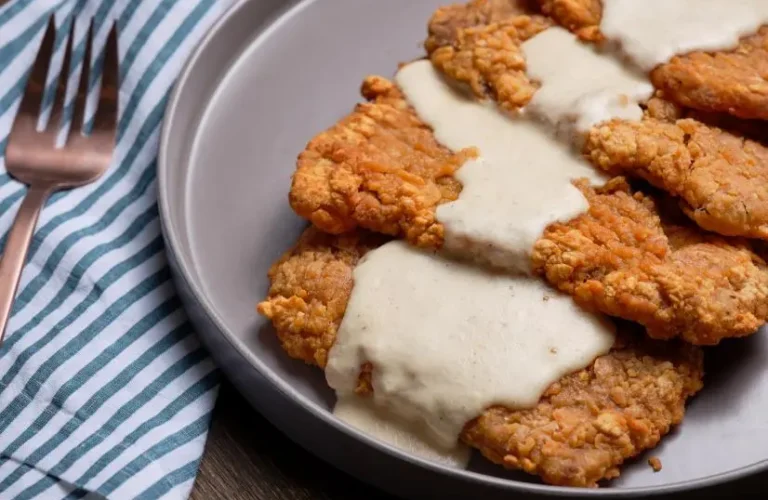
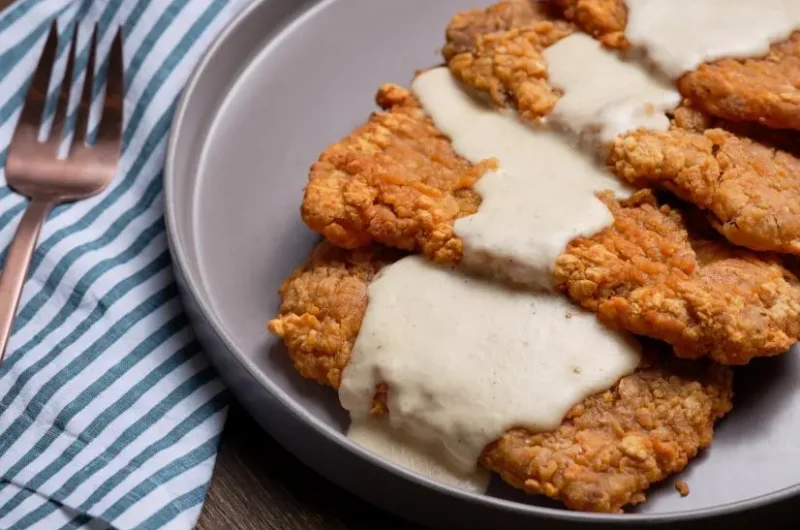
Chicken Fried Steak is an easy Southern dinner made with cube steaks in a crunchy buttermilk crust, served under creamy country gravy. Because each steak fries in about three minutes, this comfort food recipe suits weeknight dinners, weekend breakfast, Sunday supper or a big family meal.
Hold the oil at 350 and fry in two batches, because crowding the skillet drops the temperature and the crust turns greasy. Ninety seconds a side is all a quarter-inch cutlet needs, so the thermometer matters more than the clock.
This version works three tablespoons of the buttermilk mixture back into the dry flour, which creates clumps that fry into shaggy ridges. A tablespoon of hot sauce in the buttermilk adds vinegar tang, so the crust cuts through the heavy cream gravy.
Chicken Fried Steak
Course: DinnerCuisine: AmericanDifficulty: Easy4
servings25
minutes5
minutes870
kcalSeasoned cube steaks rest at room temperature while butter, flour and whole milk cook into a peppery country gravy. The steaks get dredged twice in a cornstarch flour blend, chilled thirty minutes, then fried and sauced.
Ingredients
4 cube steaks (3 to 4 ounces each)
Kosher salt and freshly ground black pepper
3 tablespoons unsalted butter
1½ cups plus 3 tablespoons all-purpose flour, divided
2¼ cups warm whole milk
1½ cups cornstarch
1 tablespoon Hungarian paprika
1 teaspoon garlic powder
1 cup buttermilk
1 large egg, beaten
1 tablespoon hot sauce
4½ cups vegetable oil
Directions
- Season and temper:Sprinkle the steaks liberally with salt and pepper. Set them on a rack over a rimmed baking sheet and let them sit at room temperature while you make the gravy.
- Make the gravy:Melt the butter in a medium saucepan over medium high heat. Stir in 3 tablespoons of the flour and cook until golden and bubbling, about 1 minute. Whisk in the whole milk, 1¼ teaspoons salt and ¼ teaspoon pepper and cook until it boils. Reduce to medium and cook, whisking, until thickened, 2 to 3 minutes. Remove from the heat and keep warm.
- First dredge:Whisk the remaining 1½ cups flour, cornstarch, paprika, garlic powder, ½ teaspoon pepper and 1½ teaspoons salt in a large bowl. In another bowl whisk the buttermilk, egg and hot sauce. Dredge each steak in the seasoned flour, packing it into the crevices, shake off the excess and return to the rack.
- Make the clumps:Pour 3 tablespoons of the buttermilk mixture into the seasoned flour and work it in with your fingers until it feels like wet sand with clumps.
- Second dredge:Dip each dredged steak into the remaining buttermilk mixture, letting the excess drip off. Pack the moistened flour firmly onto each steak, shake gently and return to the rack. Refrigerate at least 30 minutes.
- Fry:Pour the oil into a large cast-iron skillet fitted with a deep-fry thermometer, about halfway up the sides. Heat over high until it reads 350°F. Fry the steaks in 2 batches until golden brown, about 1½ minutes per side, then drain on paper towels.
- Serve: Whisk the warm gravy to loosen it and spoon it over the steaks.
FAQs
Why refrigerate the coated steaks for 30 minutes before frying?
The chill lets the buttermilk soak into the dry flour layer, which glues the coating onto the meat. Skip it and the crust slides off in sheets the moment the cold steaks hit the hot oil. Thirty minutes is the minimum here, though an hour on the rack works even better if you have the time.
Why make the gravy before frying the steaks?
Fried steaks go soft within minutes, so the gravy has to be finished and waiting rather than the reverse. Making it first also gives the seasoned steaks that window to come up to room temperature on the rack. The skillet is full of hot oil at the end too, so there is no burner free for a roux.
Why does the gravy look loose when it comes off the heat?
The flour keeps swelling as the gravy cools, so it tightens noticeably in the ten minutes before serving. Cooking it until it already looks thick in the pan leaves you with paste by the time it hits the plate. Whisk in a splash of warm milk if it goes too far, since thinning gravy is easier than thickening it.
Can you reuse the frying oil afterward?
Let it cool completely, strain it through a coffee filter or cheesecloth, then store it in a sealed jar. Oil used for breaded beef holds up for two or three more fries if you keep it away from light. Throw it out once it smells sharp, darkens or starts smoking below 350, because it has broken down.
Why Hungarian paprika rather than regular paprika?
Hungarian paprika is ground from a sweeter pepper and carries far more flavor than the generic supermarket kind. A full tablespoon goes into the dredge, so a dull paprika leaves the crust tasting only of plain flour. Regular sweet paprika works in a pinch, though smoked paprika changes the flavor far more than you might want