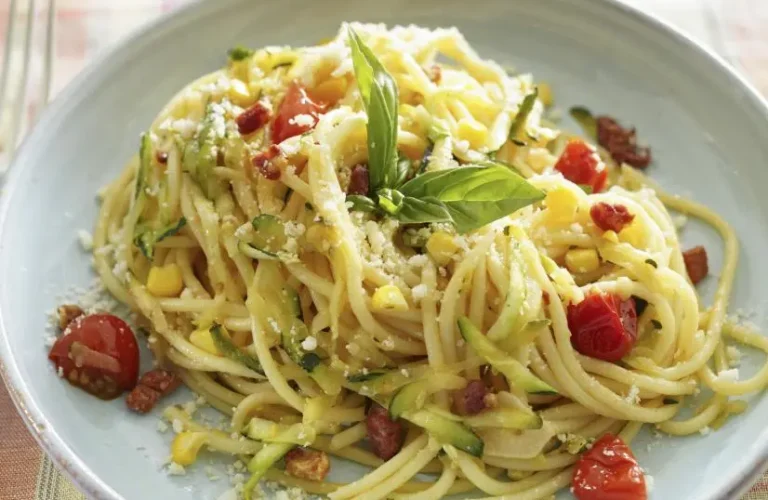
Katie Lee Summer Vegetable Pasta is an easy summer dinner made with spaghetti, zucchini, cherry tomatoes, corn and crispy pancetta, ready in 50 minutes. That makes it a quick weeknight meal or casual potluck pick, since the vegetables turn into a light sauce right in the skillet.
The key step is cooking grated zucchini and cherry tomatoes together until the tomatoes turn jammy, because that concentrated mix becomes the sauce. Rushing this stage leaves watery vegetables instead of a coating that clings to each strand.
Most summer pastas toss raw vegetables with hot noodles, but this version sautes everything in rendered pancetta fat for deeper flavor. Finishing with butter, parmesan, pecorino and torn basil off the heat keeps the sauce creamy without any cream at all.
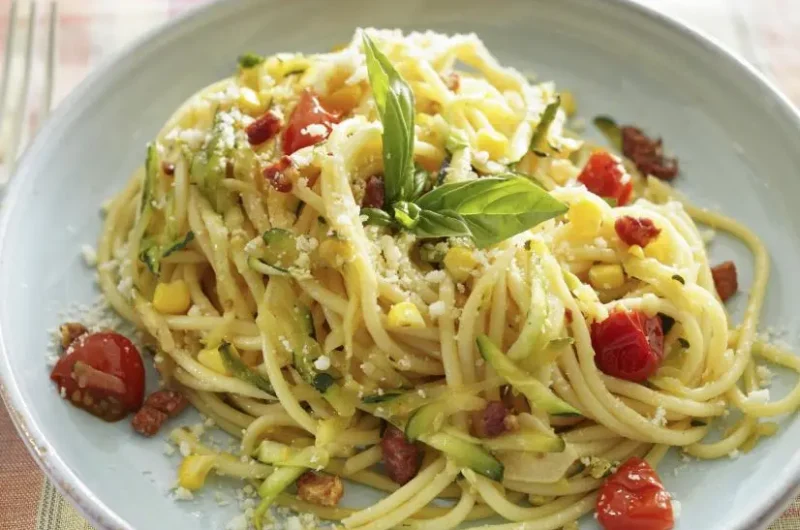
Katie Lee Summer Vegetable Pasta
Course: DinnerCuisine: AmericanDifficulty: Easy4
servings10
minutes40
minutes780
kcalAn Amalfi-inspired spaghetti that sautes grated zucchini, cherry tomatoes and fresh corn in crispy pancetta drippings until jammy. Butter, parmesan and pecorino get tossed in off the heat, and fresh basil with bright lemon zest finishes each bowl right before serving.
Ingredients
Kosher salt and freshly ground black pepper
1 pound spaghetti
One 4-ounce package diced pancetta
2 cloves garlic, thinly sliced
1 shallot, minced
1/4 teaspoon crushed red chile flakes
2 medium zucchini, grated
1 cup cherry tomatoes, halved
1 ear fresh corn, kernels removed and pulp scraped
4 tablespoons unsalted butter
1/2 cup grated parmesan
3/4 cup grated pecorino-romano
1 1/4 cups torn fresh basil
Zest of 1/2 lemon
Directions
- Cook the pasta:Bring a large pot of salted water to a boil. Cook the spaghetti until al dente according to the package directions.
- Render the pancetta:In a large skillet over medium heat, cook the pancetta until the fat has rendered and the pieces are golden and crispy, 7 to 9 minutes. Remove the pancetta to a paper towel-lined plate. Drain all but 2 tablespoons of fat from the skillet.
- Build the sauce:Return the skillet to medium-high heat. Add the garlic, shallot and chile flakes and cook until fragrant, about 2 minutes. Add the grated zucchini and cherry tomatoes and cook until the tomatoes break down and become jammy, 8 to 10 minutes. Season with 1 teaspoon salt and pepper to taste.
- Add corn and butter:Stir in the corn kernels, butter and reserved pancetta. Cook until the butter melts, about 1 minute. Drain the pasta, reserving 1 cup of starchy cooking water.
- Toss and finish:Add the pasta to the skillet and slowly drizzle in the pasta water while tossing to coat and form a sauce (you may not need all of it). Remove from the heat and add the parmesan, 1/2 cup pecorino and 1 cup basil. Toss to combine.
- Serve: Divide among bowls and garnish with the remaining 1/4 cup basil, lemon zest and remaining 1/4 cup pecorino.
FAQs
Why does the recipe drain most of the pancetta fat?
Pancetta renders a lot of fat during cooking, but the recipe keeps only two tablespoons of it in the skillet. That small amount is enough to saute the garlic, shallot and vegetables without making the dish greasy. Draining the rest keeps the pasta light while still carrying a smoky pork flavor throughout.
Why is the zucchini grated instead of diced?
Grating the zucchini on the large holes of a box grater is important because the thin shreds cook down quickly and melt into the sauce. Dicing it instead would leave chunky pieces that hold too much water and take longer to soften. The grated texture is what lets the zucchini blend into every bite of the finished pasta.
How much pasta water should I add to the sauce?
Reserving a full cup of starchy pasta water gives you control over how loose the sauce turns out in the end. Adding it slowly while tossing lets the starch bind with the butter and cheese to form a silky coating. You may not need all of it, so pour a little at a time until the consistency looks right.
Why use both parmesan and pecorino in this pasta?
Using both parmesan and pecorino gives the pasta two layers of cheese flavor that one alone cannot match. Parmesan adds a nutty depth, while pecorino brings a sharper, saltier bite that stands up well to the pancetta. Adding them off the heat prevents the cheese from clumping into stringy, uneven lumps on the noodles.
What pasta shapes can I use instead of spaghetti?
Bucatini or linguine both work as swaps for the spaghetti, since long strands hold this style of light vegetable sauce best. Short shapes like penne let the sauce pool at the bottom of the bowl instead of coating each piece evenly. Fresh pasta cooks faster than dried, so reduce the boiling time and taste early to keep it al dente.