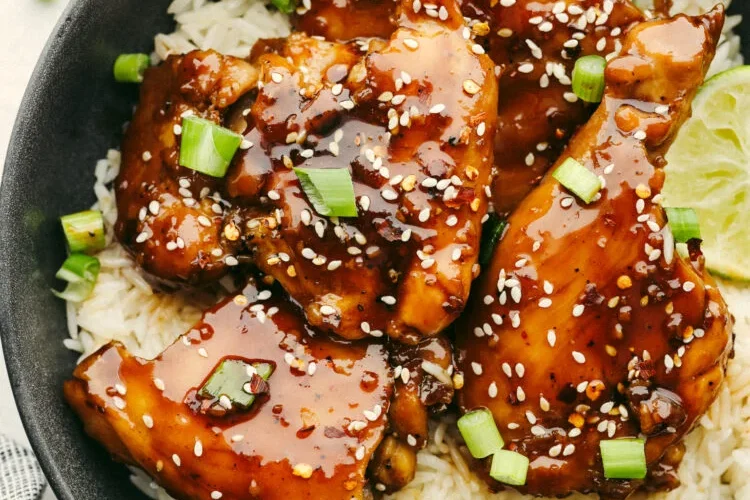
Sticky Asian Glazed Chicken is an easy weeknight dinner made with seared chicken thighs in a brown sugar, soy, hoisin and sweet chili glaze. Because everything cooks in one skillet in 25 minutes, this quick recipe suits busy weeknights, takeout nights or a simple family dinner at home.
The sauce goes from thin to sticky in a minute or two, so stay at the pan once it boils. Half a cup of brown sugar scorches the moment it passes that point, which turns the glaze bitter rather than caramelized.
This version layers hoisin and sweet chili sauce behind the soy, so the glaze carries more than sugar and salt. Fresh lime juice goes in at the end too, which keeps all that brown sugar from flattening the dish.
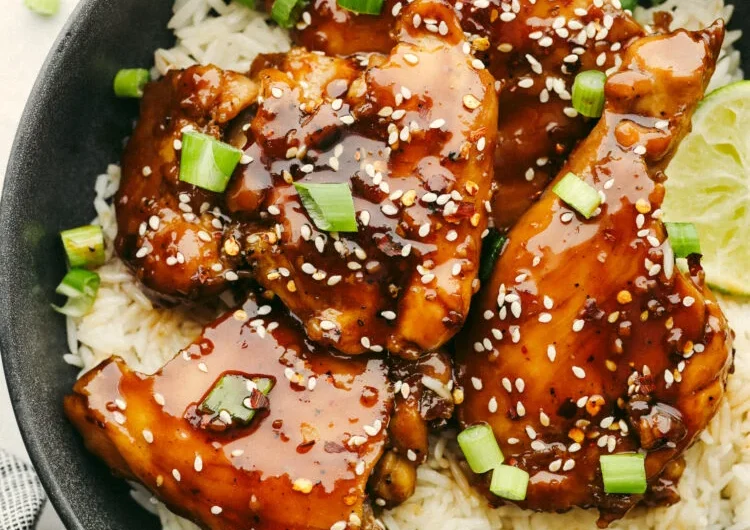
Sticky Asian Glazed Chicken
Course: DinnerCuisine: American, ChineseDifficulty: Easy4
servings5
minutes20
minutes425
kcalSeasoned boneless chicken thighs sear four to five minutes a side, then come out while the glaze is built. Brown sugar, soy, hoisin, sweet chili, ginger, garlic and lime boil down in the same skillet before the chicken returns.
Ingredients
1 pound boneless chicken thighs
1 tablespoon olive oil
Salt and pepper, to taste
½ cup brown sugar
⅓ cup low-sodium soy sauce
2 tablespoons hoisin sauce
1 tablespoon sweet chili sauce
1 tablespoon freshly grated ginger
1 teaspoon minced garlic
Juice of one lime
Dried red pepper flakes, to taste
Sesame seeds and chopped green onions, for garnish
Directions
- Sear the chicken: Heat the olive oil in a large skillet over medium high heat. Season the chicken thighs with salt and pepper and add them to the skillet.
- Cook through: Cook 4 to 5 minutes per side, until the internal temperature reaches 165°F. Set the chicken aside on a plate.
- Build the glaze: In the same skillet, whisk together the brown sugar, soy sauce, hoisin sauce, sweet chili sauce, ginger, garlic, lime juice and red pepper flakes. Bring to a boil, then reduce the heat to low.
- Coat the chicken: Return the chicken to the pan and turn it to coat both sides. Simmer in the sauce until it thickens.
- Finish: Remove from the heat and garnish with sesame seeds and chopped green onions.
FAQs
Why cook the chicken first and remove it before making the sauce?
Browning the thighs in a dry hot pan builds fond, and that fond dissolves into the sauce for depth. Chicken cooked in the sauce from the start would poach rather than sear, so you lose the crust entirely. Pulling it out also stops the meat overcooking while the sugar reduces, which takes a few more minutes on heat.
How do you keep the sauce from tasting too salty?
A third of a cup of soy sauce reduces down hard, so the salt concentrates as the glaze thickens up. Skip the added salt on the chicken and swap a couple tablespoons of the soy for water or stock. Serving it over plain rice matters more than people expect, since the rice absorbs and balances all that glaze.
Why fresh grated ginger rather than ground ginger?
Fresh ginger carries the volatile oils that read bright and citrusy, which dried ginger loses in processing. Ground ginger tastes warm and slightly dusty instead, so it works far better in baking than in a fresh glaze. If you only have ground ginger, use a quarter teaspoon, though the sauce will taste noticeably flatter.
Can you use this sauce as a marinade instead of a glaze?
Not as written, because the brown sugar and hoisin would burn long before the chicken cooked all the way through. Marinate in just the soy, ginger, garlic and lime for an hour, then reduce the sugar down separately. The glaze approach is simpler anyway, since it coats the outside without changing the cooking time at all here.
Can you make this in the oven or air fryer?
Bake the thighs at 425 for about 20 minutes, then toss them in glaze you reduced on the stovetop. The air fryer takes about 12 minutes at 380 degrees, though you still need a pan for the sauce. Neither route gives you the fond that makes the skillet version taste deeper, so the stovetop still wins here.