Deep fried turkey is a whole brined bird cooked in peanut oil in about 45 minutes, with crisp skin and breast meat that stays juicy. That makes it the centerpiece for Thanksgiving dinner or a big family gathering, since it frees the oven for every side dish.
Heat the oil to 250 degrees before the turkey goes in, not 350. A cold wet bird meeting 350 degree oil throws it into a violent boil over, and that is how fryer fires start, so you lower it into cooler oil and bring the pot up afterwards.
Alton Brown brines the bird for 8 to 16 hours in a 5 gallon drink cooler rather than the fridge, which is the only container that holds a whole turkey and 2 gallons of brine. He also pulls it at 151 degrees and lets carryover finish the job while it rests.
Buy a bigger bird than the yield suggests. A 13 to 14 pound turkey carries about 7.7 pounds of edible meat, so the 6 to 8 servings on the original page works out near 2 pounds of raw bird a head. Twelve is the realistic number at a normal portion.
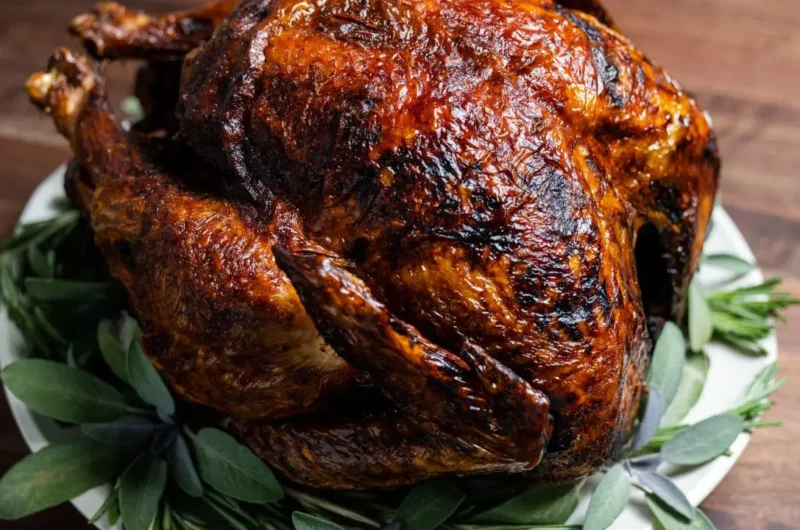
Deep Fried Turkey
A whole turkey brined overnight in salt and brown sugar, dried, then lowered into peanut oil at 250F and brought up to 350F until the breast reads 151F.
12
15
minutes45
minutes670
kcalIngredients
- For the Brine:
6 quarts hot water
1 pound kosher salt
1 pound dark brown sugar
5 pounds ice
- For the Turkey:
1 turkey, 13 to 14 pounds, giblets removed
4 to 4 1/2 gallons peanut oil, measured by the water test below
Directions
- Mix the brine: Stir the hot water, kosher salt and brown sugar in a 5-gallon upright drink cooler until both dissolve completely. Add the ice and stir until the mixture is cold, then lower the turkey in and weigh it down if it floats. Cover and leave somewhere cool for 8 to 16 hours.
- Measure your oil: Before you heat anything, sit the turkey in the dry pot and add water until it just covers the bird and still sits 4 to 5 inches below the rim. That water line is your oil quantity, which lands near 4 to 4 1/2 gallons for this size bird in a 28 to 30 quart pot.
- Dry the bird: Lift the turkey out of the brine, rinse it and pat it completely dry inside and out. Leave it at room temperature at least 30 minutes, since surface water is what makes hot oil erupt.
- Start at 250F: Set the pot on an outdoor propane burner on level ground and heat the oil to 250F, not 350. Lower the bird in slowly at that temperature, then bring the oil up to 350F and adjust the flame to hold it there.
- Fry and rest: Start checking at 35 minutes with a probe thermometer and lift the turkey out when the breast reads 151F. Rest it at least 30 minutes, during which carryover takes it to about 161F, then carve.
FAQs
How many people does a 13 pound fried turkey feed?
About 12, not the 6 to 8 the original lists. A bird that size yields roughly 7.7 pounds of edible meat once you take off the bones and skin, which is a generous 10 ounce serving for twelve people. Plan a pound of raw bird per guest and you will not run short.
How much peanut oil do I actually need?
Measure it, do not guess. Sit the raw turkey in the dry pot, pour in water until it just covers the bird, and check that the line sits 4 to 5 inches below the rim. For a 13 pound bird in a 28 to 30 quart pot that lands around 4 to 4 and a half gallons, which leaves the right headroom once the turkey displaces its volume.
Why pull the turkey at 151 degrees?
Because it is not finished at 151. A whole bird out of 350 degree oil carries over about 10 degrees while it rests, landing near 161. Food safety guidance treats 160 degrees held briefly as equivalent to 165 instantly, so the rested bird is safe and far juicier than one pulled at 165.
What makes a turkey fryer catch fire?
Water and overfilling, in that order. Ice crystals or surface moisture flash to steam and hurl oil out of the pot, so the bird must be fully thawed and patted dry. Fry outdoors on level ground away from the house, never on a deck or in a garage, and keep the burner off while you lower the bird.
Is frying better than roasting?
It is faster and it frees your oven, which is the real argument on Thanksgiving, and the skin comes out crisper. Roasting is safer and needs no special equipment, so our perfect roast turkey is the better call indoors. Frying also leaves no pan drippings, so make our best gravy ever separately from stock.