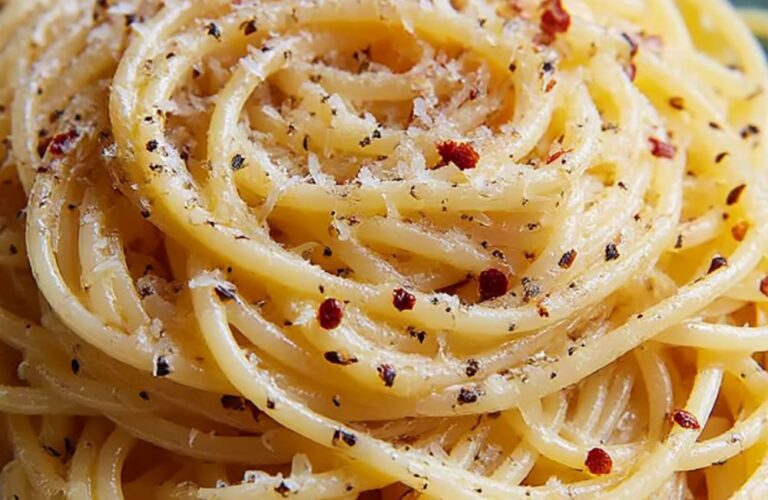
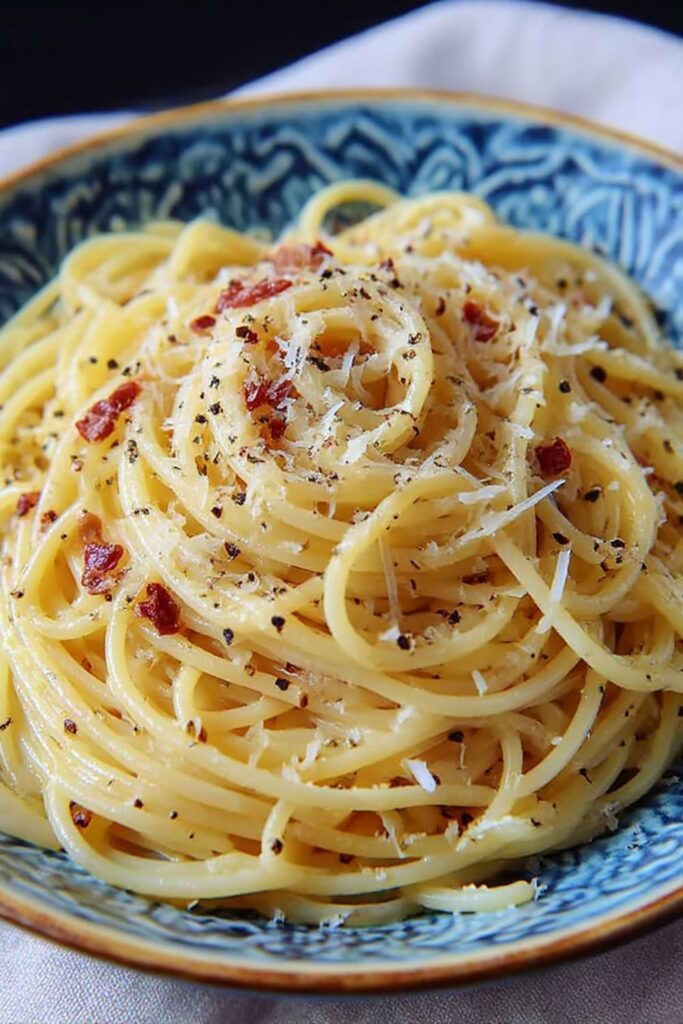
This Trader Joe’s Cacio e Pepe is a classic, simple, and elegant recipe, which is the perfect way to create a restaurant-quality Roman pasta dish at home using just a few key ingredients. It’s the ultimate quick and satisfying meal, ready in about 20 minutes.
Jump to RecipeTrader Joe’s Cacio e Pepe Ingredients
- 1 pound Trader Joe’s Spaghetti
- 6 tablespoons Trader Joe’s Extra Virgin Olive Oil
- 2 cloves garlic, minced
- 2 teaspoons freshly ground black pepper
- 1 ¾ cups freshly grated Trader Joe’s Pecorino Romano cheese
- Kosher salt, for the pasta water
How To Make Trader Joe’s Cacio e Pepe
- Cook the Pasta: Bring a large pot of generously salted water to a boil. Cook the spaghetti according to the package directions until it is al dente (tender yet firm to the bite). Before you drain it, reserve about 1 cup of the starchy pasta water.
- Bloom the Pepper and Garlic: While the pasta cooks, heat the olive oil in a large skillet over medium heat. Add the minced garlic and the freshly ground black pepper to the hot oil and cook, stirring, for 1 to 2 minutes, until it is very fragrant.
- Create the Sauce: Add the cooked, drained spaghetti directly to the skillet with the oil and pepper. Add about 1/2 cup of the reserved, hot pasta water and the Pecorino Romano cheese.
- Emulsify and Serve: Stir and toss the pasta vigorously until the cheese has melted and a creamy sauce has formed that coats the spaghetti. If the sauce is too thick, add more of the reserved pasta water, one tablespoon at a time, until it reaches your desired consistency. Serve immediately with an extra sprinkle of cheese and black pepper.
Recipe Tips
- The Starchy Pasta Water is Key! This is the most important secret to a perfect Cacio e Pepe. The hot, starchy water is not just for thinning the sauce; it’s a crucial emulsifier that helps the cheese and oil melt together into a smooth, creamy sauce that clings to the pasta, rather than a clumpy, oily mess.
- How to get the creamiest sauce? Always use a block of high-quality Pecorino Romano cheese that you grate yourself, preferably with a fine microplane. Pre-shredded cheeses are coated in starches that will make your sauce gritty.
- Why toast the pepper? “Blooming” the freshly ground black pepper in the hot oil for a minute before adding the pasta is a classic technique. It toasts the spice, which unlocks its full aromatic potential and infuses the entire dish with a deep, peppery flavor.
- Work Quickly! Cacio e Pepe comes together very fast at the end. Have your reserved pasta water and your grated cheese ready to go next to the stove. Once you drain the pasta, you need to work quickly while everything is hot to create the perfect emulsion.
What To Serve With Cacio e Pepe
This is a classic Italian pasta dish that is a complete and satisfying meal on its own. It is so rich and flavorful that it needs very little accompaniment. It is perfectly served with:
- A simple arugula salad with a lemon vinaigrette to cut the richness.
- A glass of a crisp Italian white wine, like a Pinot Grigio.
- A side of simple roasted or steamed vegetables like asparagus or broccoli.
How To Store Cacio e Pepe
- Best Eaten Fresh: This dish is at its absolute best when it is served hot and creamy, immediately after it is made.
- Reheating: Cacio e Pepe does not reheat well. The delicate cheese and oil emulsion will likely break when reheated, causing the sauce to become oily and clumpy. It is highly recommended to only make as much as you plan to eat.
Cacio e Pepe Nutrition Facts
- Serving: 1/4 of recipe
- Calories: 650 kcal
- Carbohydrates: 75g
- Protein: 25g
- Fat: 30g
- Saturated Fat: 10g
- Sodium: 950mg
Nutrition information is estimated and may vary based on ingredients and cooking methods used.
FAQs
A clumpy sauce is the #1 most common problem with Cacio e Pepe. It usually happens for one of three reasons: the pan was too hot when the cheese was added, the cheese was not finely grated, or you didn’t use enough of the hot, starchy pasta water to create a smooth emulsion.
Yes, you can, or you can use a mix of both. Traditional Cacio e Pepe is made with Pecorino Romano, which is a sheep’s milk cheese that is saltier and tangier than Parmesan. If you use all Parmesan, you may need to add a bit more salt to the final dish.
No. The most traditional, classic Roman Cacio e Pepe is made with only three ingredients: pasta, Pecorino cheese, and black pepper. The garlic is a delicious but optional addition for extra flavor.
Try More Recipes:
- Trader Joe’s Butter Chicken Recipe
- Trader Joe’s Roasted Brussels Sprouts Recipe
- Trader Joe’s Beefless Bulgogi Fried Rice Recipe
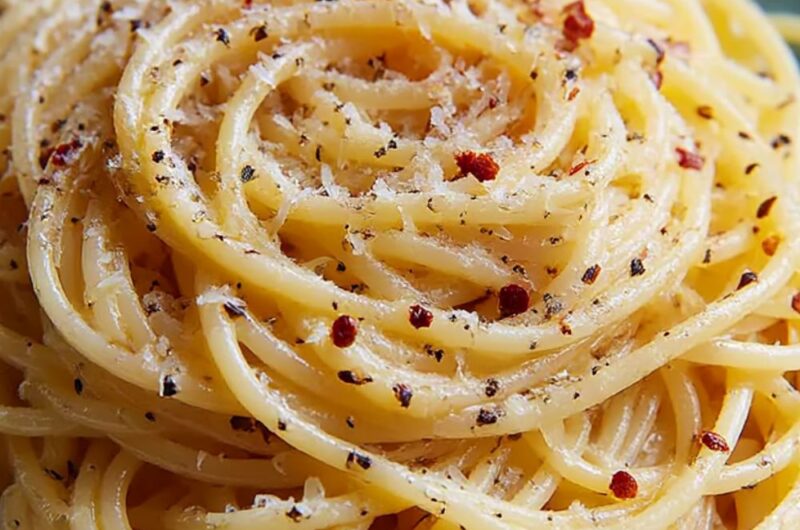
Trader Joe’s Cacio e Pepe Recipe
Course: DinnerCuisine: Italian-AmericanDifficulty: Easy4
servings5
minutes15
minutes650
kcalA classic and elegant Roman pasta dish made incredibly simple, featuring a creamy and peppery sauce made from Pecorino Romano cheese and starchy pasta water.
Ingredients
1 lb. Trader Joe’s Spaghetti
1 ¾ cups freshly grated Pecorino Romano cheese
2 tsp freshly ground black pepper
6 tbsp Trader Joe’s Extra Virgin Olive Oil
2 cloves garlic, minced
Salt, for pasta water
Directions
- Cook the spaghetti in a large pot of generously salted water until al dente. Reserve 1 cup of the pasta water before draining.
- In a large skillet, heat the olive oil over medium heat. Add the garlic and black pepper and toast for 1-2 minutes until fragrant.
- Add the hot, drained spaghetti to the skillet along with about 1/2 cup of the hot pasta water.
- Remove from the heat and immediately add the grated Pecorino Romano cheese.
- Stir and toss vigorously until a creamy, emulsified sauce forms that coats the noodles. Add more pasta water if needed.
- Serve immediately with extra cheese and black pepper.
Notes
- Pasta Water is Magic: The most important tip for this recipe is to save your hot, starchy pasta water. It is the non-negotiable secret to a creamy, not clumpy, sauce.
- Use Freshly Grated Cheese: For the smoothest sauce, you must use a block of Pecorino Romano cheese that you grate yourself, preferably with a microplane.
- Toast the Pepper: Don’t skip the step of toasting the freshly ground black pepper in the oil. This “blooming” of the spice is key to the dish’s signature flavor.
- Serve Immediately: This is a dish that must be eaten right away. The delicate sauce will thicken and can become clumpy as it cools, so have your plates ready!