
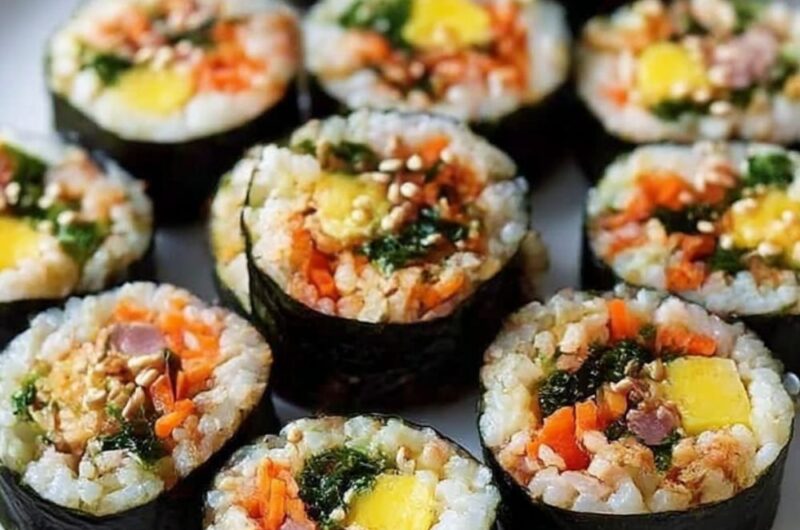
This Trader Joe’s Gimbap copycat recipe is the perfect way to recreate the viral frozen favorite at home, but even fresher and more delicious! These savory Korean seaweed rice rolls are packed with a colorful mix of seasoned vegetables, egg, ham, and crab sticks, making them a fantastic and fun meal for lunchboxes or a light dinner. This recipe is ready in about 45 minutes.
Jump to RecipeTrader Joe’s Gimbap Ingredients
For the Rice:
- 2 ½ cups cooked short-grain rice (e.g., sushi rice)
- 1 ½ Tbsp sesame oil, divided
- ⅜ tsp fine sea salt, divided
For the Fillings:
- 120 g (4.2 ounces) spinach
- 2 large eggs, beaten
- ½ carrot, julienned
- 2 to 4 imitation crab sticks, cut in half lengthwise
- 4 sticks of BBQ Kimbap ham, cut into long strips
- 4 strips of yellow pickled radish (danmuji)
- 12 strips seasoned edible burdock root (optional)
- 4 dried seaweed sheets (gim / sushi nori)
How To Make Trader Joe’s Gimbap
- Prepare the Rice and Fillings: In a mixing bowl, season the warm cooked rice with ½ Tbsp of the sesame oil and ¼ tsp of the fine sea salt. Mix well with a rice spatula and let it cool slightly.
- Cook the Egg and Vegetables: In a lightly oiled, non-stick pan, cook the beaten egg into a thin omelette, flipping once. Let it cool on a cutting board, then slice it into long, thin strips. In the same heated pan, lightly cook the carrots, crab sticks, and kimbap ham separately, for about 1 minute each, just to warm them through.
- Prepare the Spinach: Rinse the spinach and blanch it in boiling water for 30-60 seconds. Drain the spinach, run it under cold water, and then gently squeeze out all the excess water. In a small bowl, toss the spinach with ⅛ tsp of salt and ½ Tbsp of sesame oil.
- Assemble the Gimbap: Place one sheet of seaweed on a bamboo rolling mat, shiny side down. Spread about a quarter of the seasoned rice evenly and thinly over the seaweed, leaving a 2-inch gap at the top edge.
- Layer the Fillings: Arrange the prepared fillings horizontally across the center of the rice. A good method is to lay down the yellow radish pickle first, then arrange the burdock root, ham, crab stick, egg strips, carrot, and spinach around it in a neat pile.
- Roll and Seal: Starting from the bottom edge, use the bamboo mat to help you lift and roll the seaweed tightly over the fillings. Continue to roll the gimbap away from you, pressing firmly as you go to create a tight log. To seal the top edge, you can brush it with a little water or use a few grains of cooked rice as “glue.”
- Slice and Serve: Repeat the process to make four rolls. Brush the outside of each finished roll with the remaining 1 Tbsp of sesame oil. Use a very sharp knife to slice the gimbap into bite-sized pieces. Serve immediately.

Recipe Tips
- How to get rolls that stay together? The most important secret is to use a short or medium-grain “sticky” rice, like sushi rice. Long-grain rice will not stick together. Also, roll the gimbap as tightly as you can, using the bamboo mat to apply firm, even pressure.
- How to get clean, perfect slices? The key is to use a very sharp knife. For even cleaner cuts, you can lightly wipe the blade with a little sesame oil or a damp paper towel between each slice. This prevents the sticky rice from clinging to the knife.
- Can I make this ahead of time? Gimbap is a perfect make-ahead lunch! You can store the whole, unsliced rolls tightly wrapped in plastic wrap in the refrigerator for up to a day. For the best flavor, let them come to room temperature for about 20-30 minutes before slicing and serving.
- How do I prevent overfilling? It’s easy to get carried away with the delicious fillings. Be mindful to use only a thin, neat line of each ingredient. Overfilling is the number one cause of gimbap rolls that are difficult to seal and fall apart.
What To Serve With Gimbap
Gimbap is a complete and satisfying meal all on its own, perfect for picnics and lunchboxes. It is traditionally served with classic Korean side dishes (banchan) like:
- Kimchi
- Korean yellow pickled radish (danmuji)
How To Store Gimbap
- Refrigerate: Store the sliced gimbap in an airtight container in the refrigerator. It is best eaten within 1-2 days. Be aware that the rice will become hard and dry when chilled.
- Serving Leftovers: For the best texture, let refrigerated gimbap sit out at room temperature for about 30 minutes before eating to allow the rice to soften. Some people also enjoy dipping the slices in a little egg wash and pan-frying them until golden.
Gimbap Nutrition Facts
- Serving: 1 roll
- Calories: 259kcal
- Carbohydrates: 36g
- Protein: 6g
- Fat: 9g
Nutrition information is estimated and may vary based on ingredients and cooking methods used.
FAQs
While they look similar, the main difference is the seasoning. Japanese sushi rice is seasoned with vinegar, while Korean gimbap rice is seasoned with sesame oil and salt. Gimbap also typically contains cooked or pickled fillings, whereas sushi often features raw fish.
You can find all of these specialty ingredients at a Korean or large Asian grocery store. They are often sold in packages specifically pre-cut for gimbap.
A bamboo mat makes it much easier to get a tight, even roll. However, if you don’t have one, you can use a clean tea towel or a sturdy piece of parchment paper or plastic wrap as a substitute to help you roll it tightly.
Try More Recipes:
- Trader Joe’s Sautéed Green Beans Recipe
- Trader Joe’s Espresso Martini Recipe
- Trader Joe’s Egg Bites Recipe
Trader Joe’s Gimbap Recipe
Course: DinnerCuisine: KoreanDifficulty: Easy4
servings30
minutes40
minutes300
kcalA fresh, homemade copycat of the viral Trader Joe’s favorite, these savory Korean seaweed rice rolls are packed with a colorful variety of seasoned fillings.
Ingredients
2 ½ cups cooked short-grain rice
4 dried seaweed sheets (nori)
Fillings: 120g spinach, 2 eggs (cooked into an omelette and sliced), ½ julienned carrot, 2-4 imitation crab sticks, 4 sticks kimbap ham, 4 strips yellow pickled radish (danmuji).
Seasoning: 2 Tbsp sesame oil, ⅜ tsp salt.
Directions
- Season the cooked rice with ½ Tbsp sesame oil and ¼ tsp salt.
- Prepare all the fillings: blanch and season the spinach; make a thin egg omelette and slice it; lightly cook the carrots, crab, and ham.
- Lay a sheet of seaweed on a bamboo mat, spread with rice, leaving a border at the top.
- Arrange a neat line of all the fillings horizontally across the center of the rice.
- Roll the gimbap tightly from the bottom up, using the mat to apply pressure. Seal the top edge with a little water.
- Brush the finished rolls with the remaining sesame oil and slice into bite-sized pieces.
Notes
- Use Sticky Rice: The most important tip for this recipe is to use a short or medium-grain rice (like sushi rice) that will stick together properly.
- Roll it Tight: Use your bamboo mat to apply firm, even pressure as you roll. This is the secret to a gimbap that holds its shape and doesn’t fall apart when you slice it.
- Use a Sharp, Wet Knife: For perfectly clean slices, use a very sharp knife and wipe the blade with a damp paper towel between each cut.
- Don’t Overfill: Be careful not to overstuff your rolls. A small, neat line of each filling is all you need.